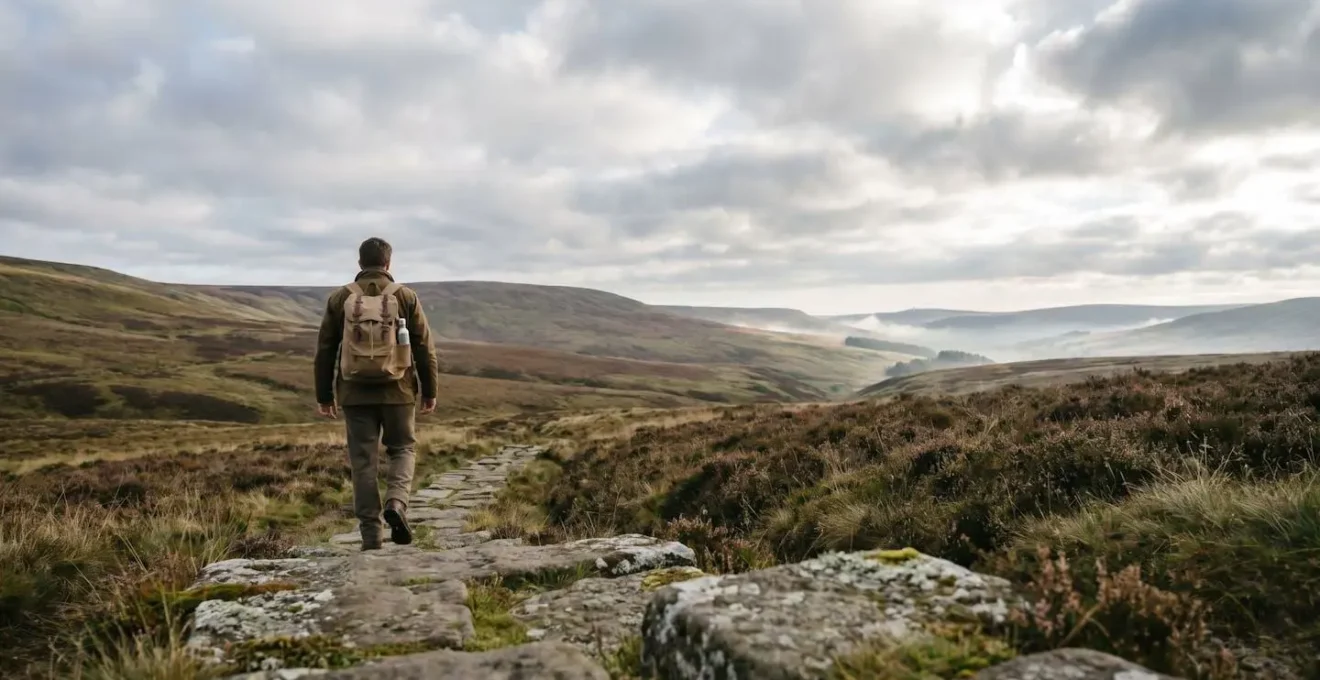
True conscious exploration goes beyond basic rules; it’s about actively enhancing the UK’s precious landscapes and communities every time you visit.
- Your spending choices can either fuel “economic leakage” or directly build the resilience of local economies.
- Your travel timing and methods can either add strain to fragile ecosystems or help sustain them for the future.
Recommendation: Adopt a mindset of “temporary stewardship” on your next trip to turn your visit into a positive and regenerative force.
For anyone who has stood on a windswept peak in the Lake District or walked a coastal path in Pembrokeshire, the feeling is familiar: a deep love for the raw beauty of the UK’s national parks, shadowed by a creeping worry. You see the worn footpaths, the crowded car parks, the signs of a landscape groaning under the weight of its own popularity. You wonder, “Am I part of the problem?” This is a valid concern, especially when research shows that a staggering 93% of British travellers want to travel more sustainably. The desire for change is clearly there.
The standard advice often revolves around the excellent “Leave No Trace” principles or general encouragement to “buy local.” While these are vital starting points, they only scratch the surface. They can feel like a disconnected list of rules rather than a coherent philosophy. What if the most powerful shift isn’t just following a checklist, but adopting a new mindset entirely? A move away from being a passive tourist—a consumer of places—and towards becoming a conscious explorer, a temporary steward of the landscapes and communities you cherish.
This guide is built on that very principle. It reframes responsible travel not as a series of restrictions, but as an opportunity to build a reciprocal relationship with the places you visit. We will explore how your choices, from the path you tread to the food on your plate, can become acts of preservation and support. This is about transforming your travel from a simple transaction into a meaningful contribution, ensuring these wild places can thrive for generations to come.
This article provides a framework for that transformation. By exploring eight key pillars of conscious travel, you will discover how to make every journey a force for good. The following summary outlines the path to a deeper, more responsible exploration of the UK’s national parks.
Summary: A Guide to Conscious Exploration in the UK’s National Parks
- Leave No Trace: What Are the 7 Principles Every Hiker Must Follow?
- Hyper-Local Tourism: Why Buying Direct from Farmers Matters When You Travel?
- Off-Peak Travel: Why Visiting Cornwall in November Is Better for Everyone?
- Train vs Car: Is It Possible to Explore the Highlands Without Driving?
- Conservation Holidays: How to Fix Footpaths While You Visit the Peak District?
- Food Miles vs Lifecycle: Is Local Hothouse Lettuce Better than Imported Field Lettuce?
- Invasive Species: How to Tackle Japanese Knotweed Without Nasty Chemicals?
- Why Is Safeguarding Biodiversity as Critical as Fighting Climate Change?
Leave No Trace: What Are the 7 Principles Every Hiker Must Follow?
The concept of “Leave No Trace” is the bedrock of responsible outdoor recreation, but in the densely populated and ecologically unique UK, it carries particular weight. Unlike the vast wildernesses of North America, Britain’s national parks are living, working landscapes with fragile ecosystems often in close proximity to towns and farms. This proximity leads to unique pressures, as research on UK hiking impact shows higher rates of erosion in concentrated areas. Practising these principles is not just good etiquette; it’s a critical act of preservation.
The philosophy is simple: leave a place in a better state than you found it, or at the very least, exactly as you found it. This means every decision, from planning your route to disposing of an apple core, is made with a conscious awareness of its impact. The seven core principles provide a clear, actionable framework for achieving this:
- Plan Ahead and Prepare: Research trails, check weather forecasts, and carry the right gear. A well-prepared hiker is less likely to get into situations where they might damage the environment, such as by taking shortcuts that cause erosion.
- Travel and Camp on Durable Surfaces: Stick to established paths. When camping, choose hard surfaces like rock or dry grass, at least 30 metres from water sources, to protect fragile UK peat bogs and heathlands.
- Dispose of Waste Properly: This is the famous “pack it in, pack it out” rule. All litter, including items we think of as biodegradable like tea bags and fruit peels, must be carried home. In the cold, acidic soils of UK uplands, an orange peel can take years to decompose.
- Leave What You Find: Resist the urge to build rock cairns, take home interesting stones, or disturb historical features. Appreciate them with your camera and leave them for others to discover.
- Minimise Campfire Impacts: The risk of wildfire on peat moorlands is exceptionally high and the damage can be permanent. Lightweight stoves are the responsible choice for cooking.
- Respect Wildlife: Observe animals from a distance, never feed them, and keep pets under control, especially during nesting seasons.
- Be Considerate of Others: Keep noise to a minimum to preserve the natural soundscape, yield to others on the trail, and maintain a positive attitude. Your presence should enhance, not detract from, the experience of others.
The visual impact of even “biodegradable” waste can be a jarring reminder of our presence. The image below shows how a simple piece of discarded fruit disrupts the delicate micro-ecology of an upland environment, a world away from a compost bin at home.
As the photograph starkly illustrates, what seems harmless in one context can be a significant disturbance in another. This single piece of peel alters soil chemistry and disrupts the native flora. Understanding these micro-impacts is the first step towards true temporary stewardship, where we actively protect the environment, down to the smallest detail.
Hyper-Local Tourism: Why Buying Direct from Farmers Matters When You Travel?
The term “buy local” is a common refrain in sustainable travel, but its importance is often understated. It’s not just about enjoying a tastier pint or a fresher pie; it’s a powerful tool to combat a pervasive issue in tourism known as economic leakage. This phenomenon occurs when the money spent by tourists doesn’t stay in the local community but instead “leaks” out to the head offices of multinational hotel chains, tour operators, and food suppliers. The scale of the problem is startling; tourism economic impact research suggests that between 50% and 80% of tourist spending often leaves a destination’s economy.
When you stay in a chain hotel, eat at a fast-food restaurant, or shop at a supermarket in a national park town, a significant portion of your money is siphoned away, bypassing the very people and businesses that make the place unique. This weakens the local economy, makes it more dependent on seasonal and often low-wage jobs, and can erode the community fabric that is a key part of the visitor experience.
Practising hyper-local tourism is the direct antidote to this. It means consciously directing your spending towards businesses that are locally owned and operated. This could be:
- Choosing a family-run B&B over a corporate hotel.
- Eating at an independent pub or café that sources ingredients from nearby farms.
- Buying souvenirs directly from a local artisan’s workshop.
- Stopping at a farm shop for your picnic supplies instead of a national supermarket chain.
Every pound spent in this way has a multiplier effect. The farmer who sells you cheese then spends that money at the local post office, who in turn pays a local accountant. Your tourist spending becomes an investment, strengthening the economic resilience and self-sufficiency of the community. It ensures that the people who are the stewards of the landscape you’ve come to admire can afford to continue living and working there. This simple choice transforms your role from a mere consumer to an active supporter of the local ecosystem, both environmental and economic.
Off-Peak Travel: Why Visiting Cornwall in November Is Better for Everyone?
The images of gridlocked roads into Cornwall or packed trails on Snowdon are a familiar symptom of overtourism. The most common advice—travel off-peak—is often framed as a selfish benefit: avoid the crowds, get a cheaper deal. While true, this perspective misses the more profound, community-focused reason why off-season travel is a cornerstone of conscious exploration. It’s about providing a sustainable, year-round economy for the people who live in these beautiful places.
Tourism-dependent economies are often caught in a “boom and bust” cycle. A frantic, high-pressure summer season is followed by a long, quiet winter where businesses struggle and employment becomes precarious. As the Canopy & Stars Sustainability Team points out:
For tourism to be truly sustainable, local people need year-round income rather than seasonal work.
– Canopy & Stars Sustainability Team, The problem with overtourism and what you can do to help
Choosing to visit in the shoulder seasons (spring and autumn) or the off-season (winter) helps to smooth out this damaging cycle. It allows businesses to retain staff, invest in their properties, and maintain a steady presence. This is already a growing trend; recent Cairngorms National Park data demonstrated an 18% growth in off-peak visitors between 2019 and 2023, showing a clear shift in traveller habits.
Beyond the economic benefits, off-peak travel offers a more authentic experience. Imagine Cornwall in November: the beaches are empty, reclaimed by dog walkers and surfers. The coastal paths are yours to wander, with dramatic, moody skies overhead. The pubs are filled with locals, a roaring fire in the hearth. You experience the place as it truly is, not as a theme park for summer visitors. You get a deeper sense of community and a quieter, more contemplative connection to the landscape. It reduces pressure on infrastructure, lessens environmental erosion, and gives you a more memorable and meaningful trip. It’s a true win-win for both the visitor and the visited.
Train vs Car: Is It Possible to Explore the Highlands Without Driving?
For many, the idea of exploring the vast, wild landscapes of places like the Scottish Highlands is inextricably linked with the freedom of a car. Yet, this reliance on private vehicles is a major contributor to carbon emissions, air pollution, and the very traffic congestion that can detract from the sense of peace these places offer. The good news is that exploring even the most epic UK landscapes without a car is not only possible but can also be a richer, more immersive experience.
The journey itself becomes part of the adventure. Instead of focusing on the road, you are free to gaze out of the window, watching the landscape unfold. The pace of travel slows down, allowing for a deeper connection with your surroundings. This is not a compromise; it’s a different, more deliberate way of seeing.
Case Study: The West Highland Line
Often rated as one of the world’s most scenic rail journeys, the West Highland Line from Glasgow to Fort William and Mallaig is a prime example of car-free exploration. It carves a path through otherwise inaccessible terrain, crossing the stark beauty of Rannoch Moor and the iconic Glenfinnan Viaduct (of Harry Potter fame). From its stations, you gain access to the foot of Ben Nevis, the gateway to Glencoe, and ferry connections to the Isle of Skye. This single train line proves that truly epic Highland adventures are entirely achievable without ever touching a car key.
The train window becomes a frame for a moving masterpiece, connecting you to the landscape in a way that navigating traffic and searching for parking simply cannot.
Of course, the challenge often lies in the “last mile”—getting from the train station to the trailhead or your accommodation. But even here, a growing network of solutions is making car-free travel more seamless. A combination of strategic planning and local services can unlock the most remote corners:
- Use Hubs: Base yourself in a transport hub like Inverness or Fort William, which offer extensive bus connections and local tours.
- Combine Transport: Mix ScotRail trains with Scottish Citylink or local bus services to create a comprehensive itinerary.
- Travel Passes: The Spirit of Scotland Pass offers incredible value, bundling trains, ferries, and some bus routes.
- E-Bikes: Many towns like Aviemore and Pitlochry now offer e-bike hire at or near the train station, perfect for exploring nearby glens.
- Small-Group Tours: Let someone else do the driving for a day to reach areas with no public transport, like Torridon or Applecross.
Conservation Holidays: How to Fix Footpaths While You Visit the Peak District?
Conscious exploration often focuses on minimising negative impact, but what if your holiday could leave a place better than you found it? This is the principle behind conservation holidays, a growing movement that embodies the idea of a reciprocal relationship with our national parks. Instead of just taking memories and photographs, you actively give back your time and energy to help preserve the very landscapes you’ve come to enjoy.
This isn’t about sacrificing your holiday; it’s about enriching it. Organisations across the UK, from the National Trust to smaller charities like The John Muir Trust, offer opportunities to get involved. Activities can range from a single “volunteer day” to a full week-long working holiday, and they cover a huge spectrum of tasks:
- Footpath maintenance: Repairing erosion on popular trails in the Peak District or Snowdonia.
- Habitat restoration: Planting native trees in the Caledonian Forest or removing invasive rhododendrons in North Wales.
- Coastal clean-ups: Clearing plastic pollution from beaches in Cornwall or Pembrokeshire.
- Archaeological conservation: Helping to maintain and protect historic sites like Hadrian’s Wall.
The economic footprint of visitors is immense; Peak District National Park Authority data shows a £730 million total economic impact from tourism in a single year. By channelling even a fraction of that visitor energy into positive action, the benefits can be transformative. Furthermore, this approach is often welcomed by local communities. A survey of Peak District residents revealed a positive view of tourism’s role in conservation.
8 in 10 agreed that tourism supported local business through visitor spend and only 16% of residents thought that tourism did not help protect the National Park.
– Peak District Resident Survey, Peak District visitor destination report
Participating in a conservation holiday provides a unique and powerful connection to a place. You learn practical skills, meet like-minded people, and gain a profound understanding of the work involved in maintaining these landscapes. The satisfaction of looking at a repaired footpath or a cleared stretch of woodland, knowing you played a part, is a souvenir that lasts far longer than any T-shirt. It is the ultimate expression of temporary stewardship in action.
Food Miles vs Lifecycle: Is Local Hothouse Lettuce Better than Imported Field Lettuce?
The concept of “food miles”—the distance food travels from producer to consumer—has been a popular shorthand for sustainable eating. The logic seems simple: buying local food that hasn’t been flown halfway across the world must be better for the environment. While the intention is good, this simplistic view can sometimes be misleading. To make truly conscious choices, we need to embrace a more sophisticated idea: lifecycle thinking.
A lifecycle assessment (LCA) looks at the total environmental impact of a product from “cradle to grave.” This includes not just transport, but also production, processing, packaging, and disposal. When we apply this lens, the “obvious” choice isn’t always the right one. The classic example is the UK hothouse lettuce versus the Spanish field-grown lettuce in winter.
Let’s break it down:
- The Local Hothouse Lettuce: It has very low food miles. However, to grow lettuce in the UK in February requires a heated and artificially lit greenhouse. The energy required for this heating and lighting can result in a massive carbon footprint, potentially far greater than that of transport.
- The Imported Field Lettuce: This lettuce is grown in the open fields of southern Spain, using natural sunlight and warmth. Its production footprint is very low. It is then transported to the UK by lorry. While this transport has a carbon cost, it can be significantly less than the energy cost of the local hothouse.
In this scenario, the lettuce with the higher food miles may actually have the lower overall carbon footprint. This doesn’t mean “local” is a bad principle. For seasonal produce grown in its natural season, local is almost always the best choice. A strawberry grown in Kent in June is far better than one flown from another continent. The key is to move beyond the single metric of “miles” and ask smarter questions. Is this food in season here? How was it produced? Is it being air-freighted (which has a huge footprint) or shipped by sea (much lower)? Adopting this lifecycle mindset allows for more nuanced and impactful decisions, turning a simple meal into a well-informed act of sustainability.
Invasive Species: How to Tackle Japanese Knotweed Without Nasty Chemicals?
While we often focus on what we can do to protect the visible beauty of our national parks, an invisible threat is often hitching a ride on our boots, tyres, and equipment. Invasive non-native species (INNS) like Japanese Knotweed, Himalayan Balsam, and floating pennywort pose a massive threat to the UK’s biodiversity. They outcompete native plants, destabilise riverbanks, and can alter entire ecosystems. As conscious explorers, we have a critical role to play in preventing their spread, and this requires adopting a mindset of personal biosecurity.
Biosecurity is a set of preventative measures to reduce the risk of spreading invasive species from one location to another. Many INNS spread via tiny fragments of plants, seeds, or spores carried in mud and water. A single clump of mud on a walking boot or in a kayak can be enough to introduce a new species to a pristine river system or woodland. The responsibility falls on every one of us to ensure we are not unwitting vectors of ecological damage.
The “Check, Clean, Dry” protocol is the international standard for biosecurity and is the most effective action we can take. It’s a simple habit that, if adopted by all outdoor users, can have a profound impact on protecting our native habitats. It is crucial to remember that you should never attempt to remove a species like Japanese Knotweed yourself; improper handling can worsen the spread. Instead, your role is in prevention and reporting.
Your Biosecurity Action Plan: Check, Clean, Dry
- CHECK: Before leaving any site, thoroughly inspect your boots, clothing, gear, and your dog’s fur. Look for seeds, soil, and any plant fragments that could have become attached.
- CLEAN: Remove all visible soil and organic material. Pay special attention to boot treads, velcro straps, and any equipment used in water. This should be done on-site or at a designated cleaning station.
- DRY: If possible, allow all your gear to dry completely before visiting a new area. Many invasive spores and seeds are spread through moisture and cannot survive being thoroughly dried out.
- REPORT: If you spot a suspected invasive species, photograph it and report your sighting through official channels like the GB Non-Native Species Secretariat’s reporting systems. This data is vital for conservation managers.
- AVOID SPREAD: As a golden rule, never transport plant material, soil, or water between different water bodies or sensitive habitats. What belongs in one ecosystem should stay there.
By making this simple checklist a non-negotiable part of your post-adventure routine, you are taking a direct and highly effective step to safeguard the delicate balance of the ecosystems you love to explore.
Key takeaways
- Shift your mindset from a passive “tourist” to an active “temporary steward” of the landscapes you visit.
- Your spending is a powerful tool; consciously fight “economic leakage” by supporting hyper-local businesses to build community resilience.
- Embrace personal biosecurity with “Check, Clean, Dry” – small actions on your gear prevent huge ecological damage from invasive species.
Why Is Safeguarding Biodiversity as Critical as Fighting Climate Change?
In discussions about environmental issues, climate change often takes centre stage. We focus on carbon emissions, rising sea levels, and extreme weather. While critically important, this can sometimes overshadow an equally urgent and interconnected crisis: the catastrophic loss of biodiversity. For the UK’s national parks, safeguarding biodiversity isn’t just a secondary goal; it is as fundamental as the fight against climate change itself, because the two are inextricably linked.
Biodiversity is the rich variety of life on Earth, from the smallest insects to the largest mammals, and the ecosystems they form. These complex systems provide essential “services” that we all depend on: healthy peat bogs sequester vast amounts of carbon, ancient woodlands help prevent flooding, and pollinators ensure our food supply. When biodiversity declines, the resilience of these systems weakens, making them more vulnerable to the impacts of climate change. A healthy, diverse ecosystem is our best line of defence in an uncertain future. The threat is not abstract; wildlife conservation data reveals that 25% of native mammals in the UK are currently at risk of extinction.
Every principle of conscious exploration discussed in this guide is, at its heart, an act of safeguarding biodiversity.
- Leave No Trace protects fragile habitats from erosion and pollution.
- Hyper-localism supports the rural communities who are the primary stewards of the land.
- Biosecurity prevents the spread of invasive species that decimate native wildlife.
- Conservation holidays actively restore and enhance ecosystems.
Protecting these spaces is a monumental task, but progress is being made. Efforts to preserve and expand protected areas are having a real impact, providing a crucial buffer for wildlife. As noted by Responsible Travel, there has been a massive increase in protected areas in recent decades, including the creation of two new national parks in England. These successes show that concerted effort works, and as visitors, our responsible actions contribute directly to the viability of these vital conservation projects. Protecting biodiversity is not a separate battle from climate change; it is a different front in the same war for a healthy, resilient planet.
Start planning your next UK adventure not just by the destinations you’ll see, but by the positive impact you can leave behind. Choose one principle from this guide—whether it’s adopting a biosecurity check or planning an off-peak trip—and make it the heart of your journey.