Cars & Motorcycles
The automotive landscape is undergoing its most profound transformation since the invention of the internal combustion engine. Electric powertrains are rapidly replacing traditional engines, charging networks are expanding across continents, and autonomous systems are moving from science fiction to public roads. Whether you’re considering your first electric vehicle, curious about self-driving technology, or simply trying to understand how these changes will affect your daily commute, navigating this transition requires a solid grasp of the fundamentals.
This comprehensive resource breaks down the key technologies, infrastructure challenges, and practical considerations shaping modern transportation. From the chemistry happening inside next-generation batteries to the economics of home charging, from understanding autonomy levels to preparing your household for electrification—we’ll explore the essential knowledge you need to make informed decisions in an era of rapid automotive evolution.
The shift to electric and autonomous mobility isn’t just about swapping one engine type for another. It represents a fundamental reimagining of how vehicles are powered, charged, driven, and even owned. Let’s examine the critical elements driving this revolution.
The Electric Powertrain Revolution: Why Now?
Electric vehicles have existed for over a century, yet only recently have they become viable alternatives to petrol and diesel cars. This shift stems from converging advances in battery energy density, falling production costs, and increasingly stringent emissions regulations worldwide. Unlike combustion engines that waste roughly 70% of fuel energy as heat, electric motors convert over 90% of electrical energy into motion, making them inherently more efficient.
The transition also addresses urban air quality concerns. Cities worldwide face challenges from nitrogen oxides and particulate matter produced by conventional vehicles. Electric powertrains produce zero tailpipe emissions, though their overall environmental impact depends heavily on how the electricity they consume is generated. In regions with high renewable energy penetration, EVs offer dramatically lower lifetime carbon footprints compared to their fossil-fueled counterparts.
Perhaps most importantly for consumers, electric powertrains deliver immediate torque and remarkably smooth acceleration. Maintenance requirements drop significantly—no oil changes, fewer brake replacements thanks to regenerative braking, and drastically simpler drivetrains with fewer moving parts. These practical advantages, combined with improving range and charging infrastructure, are transforming electric vehicles from niche products into mainstream transportation solutions.
Solid-State Batteries: The Next Leap Forward
Current lithium-ion batteries have brought electric vehicles into the mainstream, but their limitations remain evident: charging times measured in hours rather than minutes, range anxiety on longer journeys, and safety concerns around thermal runaway. Solid-state battery technology promises to address all these challenges by replacing the liquid electrolyte found in conventional batteries with a solid material.
How Solid Electrolytes Enhance Safety
The liquid electrolyte in traditional lithium-ion cells is flammable and can trigger thermal runaway—a chain reaction where heat causes more heat, potentially leading to battery fires. Solid electrolytes are non-flammable and far more thermally stable. If a solid-state cell is punctured or damaged, it won’t leak flammable liquid or readily ignite. This fundamental safety advantage could eliminate the need for heavy cooling systems and complex battery management architectures, reducing vehicle weight and cost.
Energy Density and Driving Range
Solid-state designs can theoretically achieve double the energy density of current lithium-ion cells by enabling the use of lithium metal anodes instead of graphite. In practical terms, this means a battery pack occupying the same space could deliver twice the range—turning a 250-mile vehicle into a 500-mile one without adding weight. Alternatively, manufacturers could halve battery size and weight while maintaining current range figures, improving efficiency and reducing costs. This flexibility makes solid-state technology particularly attractive for both long-range luxury vehicles and compact city cars where space is premium.
Fast Charging Capabilities
Solid electrolytes can accept charge at much higher rates than liquid ones because they don’t suffer from lithium plating issues that degrade conventional batteries during rapid charging. While today’s fast chargers require 30-45 minutes to reach 80% capacity, solid-state cells could potentially charge to similar levels in under 10 minutes—approaching the refueling time of petrol stations. This breakthrough would effectively eliminate one of the last major psychological barriers to electric vehicle adoption.
Charging Infrastructure and Grid Integration
The proliferation of electric vehicles creates both challenges and opportunities for electrical infrastructure. Unlike petrol stations that operate independently of the broader energy system, EV charging is intimately connected to the electrical grid, raising questions about capacity, cost, and smart integration.
Grid Capacity and Demand Management
Can existing electrical grids handle millions of vehicles charging simultaneously? The answer depends heavily on when and how charging occurs. If every EV owner plugs in immediately upon arriving home at 6 PM, local transformers and distribution networks could become overwhelmed. However, intelligent charging systems can shift demand to off-peak hours overnight when industrial and commercial consumption drops dramatically. Dynamic pricing structures that offer electricity at 2p/kWh during low-demand periods incentivize users to charge when the grid has excess capacity, naturally balancing load without requiring expensive infrastructure upgrades.
Home Charging: From Street Cables to Wallboxes
Most EV charging happens at home overnight, making residential charging infrastructure critical. A standard 7kW wallbox can fully charge a typical EV battery in 6-8 hours—perfectly adequate for overnight charging. However, larger batteries or drivers with higher daily mileage might require 22kW chargers that can replenish batteries in 2-3 hours. The challenge isn’t just the wallbox itself but ensuring the home’s electrical supply and street-level infrastructure can support this additional load. In older neighborhoods, upgrading distribution cables represents a significant cost, raising difficult questions about who bears this expense—individual homeowners, local authorities, or energy companies.
Vehicle-to-Grid Technology and Energy Resilience
Perhaps the most revolutionary aspect of EV integration is Vehicle-to-Grid (V2G) technology, which transforms cars from passive consumers into mobile energy storage units. During peak demand periods, participating vehicles can discharge electricity back to the grid, earning their owners income while stabilizing the network. A typical EV battery holds 60-100kWh—enough to power an average home for several days. This bidirectional capability could fundamentally reshape energy markets, providing grid-scale storage that helps integrate intermittent renewable sources like wind and solar.
Practical Considerations for EV Ownership
Moving from theory to practice requires understanding the real-world economics and logistics of owning an electric vehicle. Several factors differ significantly from traditional car ownership.
Total Cost of Ownership vs. Purchase Price
Electric vehicles typically carry higher upfront costs than equivalent petrol or diesel models, but this gap narrows considerably when examining total cost of ownership over five years. Electricity costs roughly one-quarter the price of petrol per mile, maintenance expenses drop by 30-40% due to simpler mechanicals, and many regions offer tax incentives or exemptions. Company car drivers particularly benefit from favorable benefit-in-kind tax treatment. However, depreciation patterns differ—early EVs lost value rapidly as technology improved, though this trend is stabilizing as the market matures. Potential buyers should calculate their specific usage patterns rather than relying on general comparisons.
Battery Health and Second-Hand Markets
The battery represents the most expensive single component of an electric vehicle, making its condition critical when purchasing used. Unlike engines where wear is relatively obvious, battery degradation is subtle. State of health typically ranges from 100% (new) to around 70% (end of useful vehicle life), with most quality batteries losing only 2-3% capacity annually. Before purchasing a second-hand EV, request a professional battery health check examining capacity retention, internal resistance, and cell balance. Many manufacturers offer battery warranties extending 8 years or 100,000 miles, providing valuable protection for used buyers.
Autonomous Vehicles and the Mobility Future
While electrification transforms how vehicles are powered, automation promises to revolutionize who—or what—drives them. The convergence of these technologies is reshaping fundamental assumptions about transportation and urban planning.
Understanding Autonomy Levels and Current Capabilities
The term “self-driving” encompasses a wide spectrum of capabilities defined by SAE levels 0 through 5. Level 2 systems, common in modern vehicles, handle steering and acceleration under driver supervision but require constant attention. Level 3 allows drivers to disengage under specific conditions but must be ready to resume control. Level 4 vehicles operate fully autonomously in defined areas—urban centers, highway corridors—without requiring human intervention. Level 5 represents theoretical full autonomy in all conditions. Currently, no production vehicles exceed Level 3, and even advanced test programs operate within carefully mapped environments. The gap between assisted driving and true autonomy remains substantial, involving not just sensors and algorithms but legal frameworks, insurance models, and ethical decision-making protocols.
Robotaxis, Ownership Models and Urban Planning
Autonomous technology enables new mobility models that could fundamentally alter vehicle ownership. If autonomous pods can summon themselves on demand, urban residents might abandon private car ownership entirely, subscribing instead to robotaxi services. This shift could dramatically reduce the number of vehicles needed—studies suggest shared autonomous fleets might provide equivalent service with 70% fewer cars, freeing vast amounts of urban space currently devoted to parking. However, this future depends on solving the “last mile” problem in suburbs and rural areas where density doesn’t support shared services. The infrastructure question also looms large: do we need expensive smart road systems with embedded sensors and communication networks, or can sufficiently intelligent vehicles navigate existing infrastructure? The answer likely involves both elements, varying by environment and use case.
The transformation of cars and motorcycles from mechanical objects into software-defined, grid-connected, potentially autonomous platforms represents one of the most significant technological shifts in modern history. Whether you’re preparing your household for EV ownership, evaluating the true costs of electric mobility, or simply curious about when autonomous pods might replace your daily commute, understanding these fundamental technologies and trends empowers better decisions. The vehicles of tomorrow will be cleaner, smarter, and more integrated into our energy and transportation systems—but getting there requires navigating a complex transition period where old and new coexist, infrastructure plays catch-up, and early adopters help shape the standards everyone will eventually follow.

Are Autonomous Pods the Definitive Solution to Urban Congestion in UK Cities?
The success of autonomous vehicles in the UK hinges not on the sophistication of the technology, but on the strategic implementation of a new urban operating system. Simply replacing human-driven cars with autonomous ones risks creating “automated congestion” without systemic…
Read more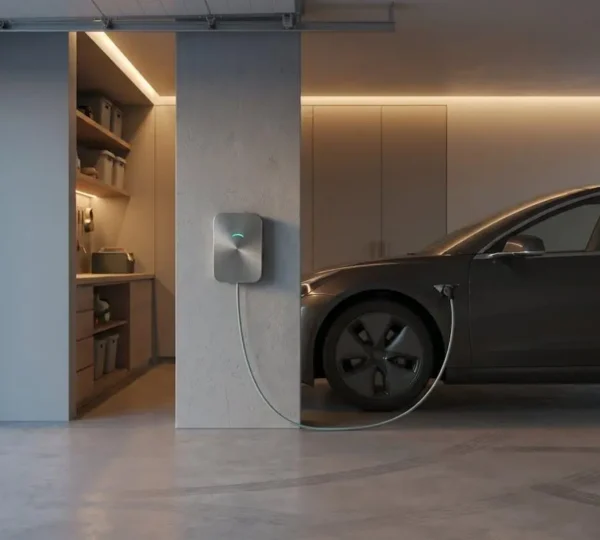
How to Prepare Your Household for Powertrain Electrification and EV Ownership?
In summary: Analyse your daily mileage to “right-size” your EV’s battery; a bigger battery isn’t always better or cheaper for city driving. For most households, a 7kW smart wallbox is the optimal choice for cost-effective overnight charging, making 22kW chargers…
Read more
How Will the UK National Grid Cope with the Electric Mobility Revolution?
The mass adoption of Electric Vehicles represents not a threat to the UK National Grid, but a significant, manageable opportunity to build a more resilient and responsive energy system. Vehicle-to-Grid (V2G) technology transforms EVs from passive loads into active, revenue-generating…
Read more
Why Are Solid-State Batteries the Holy Grail for Electric Vehicles?
Solid-state technology isn’t an incremental update; it’s a fundamental reimagining of the battery, solving core lithium-ion flaws at a molecular level. Safety is achieved by a non-flammable, physical barrier that stops the root cause of fires (dendrites). Energy density doubles…
Read more