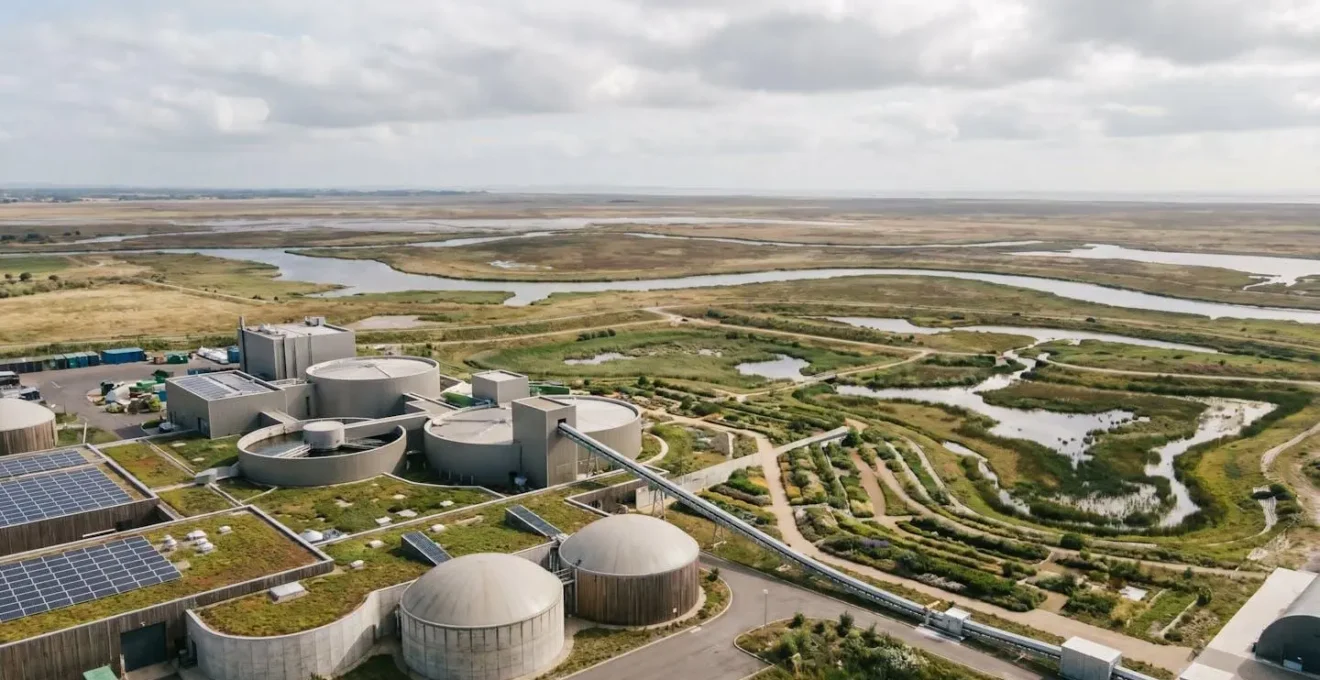
Viewing landfill as an end-of-line cost is a systemic flaw; the circular economy reframes it as a valuable asset holding recoverable materials and energy.
- Strategically mining legacy sites can yield millions in recovered metals, turning a liability into a revenue stream.
- Proactive ecodesign principles are crucial, preventing waste at the source and significantly reducing future landfill burdens and operational costs.
Recommendation: Stop managing waste; start re-engineering the entire product and waste lifecycle to unlock its hidden economic and environmental potential.
For any waste strategy consultant or landfill manager, the pressure is relentless. Sites are filling up, environmental regulations are tightening, and the operational costs of managing ever-growing mountains of waste are escalating. The traditional approach—compacting waste and seeking new landfill space—is a short-term fix for a long-term, systemic problem. It’s treating the symptom, not the cause, and it overlooks the immense potential buried within the problem itself.
The common refrain of “reduce, reuse, recycle” is a solid public-facing mantra, but for professionals operating at an industrial scale, it barely scratches the surface. The real challenge lies in fundamentally shifting perspective. What if the core issue isn’t the waste itself, but the linear “take-make-dispose” model that created it? What if a landfill wasn’t just a final resting place, but a vast, untapped resource hub—a future mine, a decentralized power plant, and a materials refinery all in one?
This is the promise of applying circular economy principles directly to landfill management. It’s a paradigm shift from passive waste containment to active resource recovery and value creation. This is not about incremental improvements; it’s about a strategic re-engineering of the entire waste lifecycle to divert tonnage, reduce landfill mass, and transform a cost center into a strategic asset.
This article provides a strategic framework for waste managers, moving beyond theory to explore the practical technologies and models that make this circular vision an operational reality. We will examine how to extract value from existing sites, optimize incoming streams, and influence upstream design to fundamentally change the nature of what ends up in a landfill.
Summary: A Strategic Guide to Circular Landfill Management
- Landfill Mining: Can We Dig Up Old Tips to Recover Valuable Metals?
- Anaerobic Digestion: Why Food Waste Should Never Go to Landfill?
- Ecodesign: How to Make Products That Are Easy to Take Apart?
- EfW (Energy from Waste): Is Burning Rubbish Better Than Burying It?
- Leachate Treatment: How to Stop Landfill Juice Polluting Groundwater?
- Recyclability: Will Solid-State Batteries Be Easier or Harder to Recycle?
- The “Conscious Collection” Trap: How to Read Labels to Spot Fake Sustainability?
- How to Build an Eco-Conscious Wardrobe Without Falling for Greenwashing?
Landfill Mining: Can We Dig Up Old Tips to Recover Valuable Metals?
The concept of “Landfill Mining” or Enhanced Landfill Mining (ELFM) treats legacy landfills not as environmental liabilities, but as rich deposits of dormant resources. Decades of disposed materials contain significant quantities of ferrous and non-ferrous metals, glass, and plastics. For a waste manager, this represents a profound opportunity: to excavate, process, and recover these materials, effectively turning a closed site into a productive asset. This process simultaneously frees up valuable landfill space and generates new revenue streams.
The economic viability is not merely theoretical. Real-world projects have already proven the model. For instance, a case study from a successful ashfill mining project demonstrated that 34,352 metric tons of metals valued at $7.42 million were recovered over a four-year period. This highlights the direct financial incentive, turning remediation costs into profit-generating activities. The scale of this opportunity is immense, with estimates suggesting there are between 150 to 300 million tonnes of potentially recoverable materials in European landfills alone.
As the image metaphorically suggests, this is a modern form of prospecting where the “ore” is our own historical waste. The process typically involves excavating the waste, screening it to separate soil and fine particles, and then using advanced sorting technologies like magnetic separators, eddy current separators, and optical sorters to isolate valuable fractions. The recovered materials—steel, aluminum, copper—can be sold back into the market, closing the loop in the circular economy. What remains can be further processed, used for energy recovery, or re-landfilled in a more stable and compact form, extending the life of the existing site.
Anaerobic Digestion: Why Food Waste Should Never Go to Landfill?
Food waste is one of the most problematic components of the municipal solid waste stream. When buried in a landfill, it decomposes anaerobically, producing methane, a greenhouse gas over 25 times more potent than carbon dioxide. The scale of this issue is staggering; in the U.S., food waste makes up 21% of landfills, yet a mere 5% is diverted for beneficial reuse. For a waste manager, diverting this stream is a top priority for reducing emissions and extending landfill life.
Anaerobic Digestion (AD) offers a superior, value-generating alternative. This biological process uses microorganisms to break down organic matter—like food scraps, agricultural waste, and sewage sludge—in an oxygen-free environment. Instead of producing uncontrolled methane emissions, an AD facility captures this “biogas” (primarily methane and carbon dioxide) and uses it as a renewable energy source to generate electricity or heat, or refines it into renewable natural gas (RNG) for vehicle fuel or pipeline injection.
The benefits extend beyond energy. The process leaves behind a nutrient-rich, semi-solid material called digestate. As researchers have pointed out, this material is a powerful tool in a circular system.
One-third of food in the United States is wasted, creating significant environmental and social challenges which anaerobic digestion can address by converting that waste into a nutrient-rich digestate suitable for use as a biofertilizer.
– Frontiers in Sustainable Food Systems research team, Household-scale anaerobic digestion of food waste study
This transforms a problematic waste stream into two valuable products: renewable energy and a soil amendment. By implementing or partnering with AD facilities, landfill operators can play a crucial role in diverting high-impact organic waste, mitigating environmental risks, and creating a new circular revenue model.
Ecodesign: How to Make Products That Are Easy to Take Apart?
While landfill mining and anaerobic digestion are powerful tools for managing existing waste, the most effective long-term strategy for reducing landfill mass is to prevent waste from being created in the first place. This is the domain of ecodesign, a proactive approach that considers a product’s entire lifecycle—especially its end-of-life—during the initial design phase. For a waste manager, advocating for and benefiting from ecodesign means receiving materials that are simpler, cheaper, and safer to handle, sort, and recycle.
Case Study: The Economic and Ecological Wins of Ecodesign
The argument for ecodesign is not just environmental; it’s economic. A 2021 study tested an ECO + LCA methodology on a conventional desk. By redesigning it for easier disassembly and using more sustainable materials, the final ecodesign achieved a more than 30% reduction in environmental impact while simultaneously reducing manufacturing costs by over 11%. This demonstrates a crucial principle for waste strategists: designing for the end-of-life is not a burden but a driver of efficiency and profitability.
Products designed for disassembly use standardized fasteners, modular components, and clear material labeling. This avoids the “monstrous hybrids” of permanently bonded, mixed materials that are impossible to recycle and destined for landfill. Instead, a product designed with circularity in mind can be quickly and easily taken apart, allowing for the clean separation and recovery of valuable materials like metals, pure polymers, and glass. The impact is significant, with estimates suggesting that longer-lived, repairable products could lead to 2 MtCO2e of emissions savings per year by 2035 in the UK alone.
This macro view of modular connectors illustrates the core idea: design that anticipates the future. When a product reaches the end of its life, it arrives at a materials recovery facility not as a complex puzzle, but as a kit of parts ready to be reclaimed. As waste managers, promoting these principles through procurement policies and supplier discussions is a powerful lever for reducing future landfill burdens.
Your Action Plan: Auditing Products for Ecodesign Principles
- Verify Materials: Check if the product uses materials with a genuinely low lifecycle impact, not just a single “green” attribute. Demand Life Cycle Assessment (LCA) data.
- Assess Energy Use: Evaluate if the product is designed to minimize energy consumption during both its manufacture and its operational life.
- Examine Longevity: Look for evidence of durability, repairability, and modularity. Are spare parts available? Is disassembly straightforward?
- Confirm End-of-Life Plan: Ensure the product is designed for easy disassembly and material recovery. Are materials clearly labeled for recycling?
- Demand Transparency: Prioritize suppliers who provide clear, evidence-based data to support their environmental claims, moving beyond vague marketing terms.
EfW (Energy from Waste): Is Burning Rubbish Better Than Burying It?
When materials cannot be prevented, reused, or recycled, the question of final disposal arises. For decades, the choice has been binary: bury it or burn it. Energy from Waste (EfW), or waste-to-energy incineration, presents itself as a more virtuous option than landfilling. The core premise is compelling: instead of letting waste sit inertly, why not use its embedded energy to generate electricity and heat, while drastically reducing its volume?
The primary benefit of EfW is undeniable. Modern incineration facilities can achieve a 90-95% waste volume reduction, transforming a vast pile of municipal solid waste into a small amount of ash. This dramatically extends the life of existing landfills, as only the residual ash needs to be disposed of. For a land-constrained waste manager, this alone makes EfW an attractive component of an integrated waste management system. It serves as a crucial backstop for the non-recyclable portion of the waste stream.
However, the “energy” part of the equation requires a more nuanced analysis. While EfW plants do produce energy, their efficiency is often questioned. Critics point out that the energy recovered from burning materials is far less than the energy saved by recycling them. Furthermore, the electrical efficiency of many incinerators is relatively low. For example, a 2023 study by Zero Waste Europe found that typical electricity-only generation efficiencies hover in the mid-20% range, significantly lower than modern gas-fired power plants. This leads to a critical debate about where EfW sits in the waste hierarchy.
The case for distinguishing between ‘recovery’ and ‘disposal’ on grounds of energy efficiency is always questionable. Given the diminishing benefits from incineration as energy systems decarbonise, it’s time to dispose of this distinction.
– Dominic Hogg, Director, Equanimator report on EU incineration facilities performance
The verdict? EfW is better than landfilling for residual, non-recyclable waste due to its immense volume reduction capability. However, it should never be seen as a substitute for robust recycling and waste prevention programs. It is a tool for managing the unavoidable, not a justification for creating it.
Leachate Treatment: How to Stop Landfill Juice Polluting Groundwater?
Every landfill, no matter how well-engineered, produces leachate. This toxic liquid, often called “landfill juice,” is formed when rainwater and the moisture from the waste itself percolate through the landfill’s contents, picking up dissolved and suspended contaminants along the way. It’s a highly concentrated cocktail of heavy metals, ammonia, organic compounds, and salts. Uncontrolled, it poses a severe threat to groundwater and surface water, making its management one of the most critical operational responsibilities for any landfill manager.
The first line of defense is a robust landfill design, featuring impermeable liners and collection systems that capture the leachate before it can escape. But collection is only half the battle. This contaminated water must then be treated. Historically, a common practice was to transport leachate to a municipal wastewater treatment plant. However, its high strength and unique chemical composition can disrupt their biological processes, making on-site treatment an increasingly preferred and necessary solution.
Modern leachate treatment involves a multi-stage process using advanced technologies to tackle its complex chemistry. Key methods include:
- Biological Treatment: Using sequencing batch reactors (SBRs) or membrane bioreactors (MBRs) to remove organic compounds and nitrogen.
- Physical/Chemical Processes: Employing methods like coagulation, flocculation, and precipitation to remove suspended solids and heavy metals.
- Advanced Oxidation: Using ozone or peroxides to break down persistent organic pollutants that are difficult to treat biologically.
- Membrane Filtration: Using reverse osmosis (RO) or nanofiltration as a final polishing step to remove remaining dissolved salts and contaminants, producing high-quality treated water that can be safely discharged or even reused on-site.
As this image conveys, the goal of modern leachate management is not just containment, but transformation. It’s about taking a highly polluting byproduct and applying technology to render it harmless, protecting vital water resources. Effective leachate treatment is a non-negotiable pillar of responsible landfill operation and a core component of environmental stewardship.
Recyclability: Will Solid-State Batteries Be Easier or Harder to Recycle?
As we shift towards an electrified future, a new and complex waste stream is emerging: advanced batteries. While current lithium-ion batteries already present significant recycling challenges due to their complex chemistry and safety risks (like fires), the next generation—solid-state batteries—is on the horizon. These batteries promise greater energy density, safety, and longevity. But for a waste manager, the crucial question is: what happens at their end-of-life? Will they be a circular economy success story or a recycling nightmare?
The answer, frustratingly, is that it depends entirely on design choices being made today. A solid-state battery replaces the liquid electrolyte of a conventional lithium-ion battery with a solid material, such as a ceramic or polymer. This eliminates some of the flammable components but introduces new challenges. The components are often bonded together in highly integrated, compact structures that can be extremely difficult to separate. If manufacturers prioritize performance above all else, we could end up with batteries that are effectively “black boxes”—impossible to disassemble and recycle economically.
This is where the principles of ecodesign become paramount. Recyclers and product designers must collaborate now, before these batteries reach mass-market scale. As experts in the field emphasize, this is a shared responsibility.
The recyclability of solid-state batteries is not a given, but will depend entirely on design choices made now. Designers must design for and from an end-of-life perspective, while stakeholders in the product’s end-of-life simultaneously must work from and for the design.
– Circular Economy Product Design Researchers, Product Eco-Design in the Era of the Circular Economy study
For waste strategists, this means engaging in the conversation now. It involves advocating for policies that mandate design for recycling, such as using reversible adhesives, standardizing components, and creating “battery passports” that detail material composition. The risk of inaction is creating a future mountain of high-tech, high-value waste that is destined for landfill simply because it was not designed to be taken apart. The opportunity is to ensure this powerful new technology is born circular from the very start.
The “Conscious Collection” Trap: How to Read Labels to Spot Fake Sustainability?
The term “Conscious Collection” has become ubiquitous in consumer marketing, especially in the fast-fashion industry. It’s a label designed to evoke a sense of environmental responsibility, suggesting that the product is somehow “greener” or more ethical. However, for a waste manager who deals with the downstream consequences, these labels are often a source of frustration. They can be a primary example of greenwashing—marketing spin that exaggerates or misrepresents a product’s environmental benefits.
A “conscious” t-shirt made from 5% recycled polyester mixed with 95% virgin cotton is not a victory for the circular economy. It’s a complex, blended material that is now even harder to recycle than a pure cotton garment. The “recycled” claim on the label may be technically true, but it obscures the larger reality that the product’s design has made it destined for landfill or incineration. This is the “Conscious Collection” trap: a focus on a single, often minor, sustainable attribute while ignoring the product’s overall lifecycle impact.
As a waste strategist, the ability to see through these claims is crucial, not just for personal consumption but for evaluating corporate waste streams and advising on procurement. The language of consumer greenwashing often mirrors the language used by B2B suppliers. To spot fake sustainability, one must ask deeper questions that go beyond the label:
- Material Purity: Is the “recycled content” blended with virgin materials in a way that makes future recycling impossible? Prioritize mono-materials.
- Full Lifecycle: Does the “sustainability” claim only apply to one small part of the lifecycle (e.g., using organic cotton) while ignoring manufacturing pollution or end-of-life issues?
- Durability and Repairability: Is the product designed to last, or is it a “conscious” but disposable item? A truly sustainable product is one that stays in use for as long as possible.
Waste is actually the result of design choices. By shifting our mindset, we can treat waste as a design flaw. In a circular economy, a specification for any design is that the materials re-enter the economy at the end of their use.
– Ellen MacArthur Foundation, Eliminate Waste & Pollution: Circular Economy Principles
This fundamental insight from the Ellen MacArthur Foundation is the ultimate antidote to greenwashing. A product’s true sustainability is not found on a marketing label, but in its inherent design. If it’s not designed to be part of a circular system, no “conscious” label can change its final destination.
Key Takeaways
- Landfills are not endpoints but potential resource hubs containing valuable metals and energy that can be recovered through strategic mining.
- Ecodesign is the most powerful lever for reducing landfill mass, as it prevents waste at the source and ensures products are built for disassembly and material recovery.
- A balanced waste strategy combines high-tech recovery (mining, EfW, AD) with preventative measures and new business models (product-as-a-service) to create a truly circular system.
How to Build an Eco-Conscious Wardrobe Without Falling for Greenwashing?
While “building an eco-conscious wardrobe” might sound like a consumer issue, the principles behind it offer a powerful framework for any waste manager or strategist. The fashion industry is a microcosm of the linear economy: rapid production, short usage cycles, and massive waste generation. By dissecting the solutions for this sector, we can extract universal strategies applicable to a wide range of industrial and commercial waste streams.
The core shift is from a model of ownership to one of performance and longevity. The most sustainable garment is the one you already own and continue to use. This principle is the cornerstone of a circular economy. As the former CEO of Patagonia, a pioneer in this field, noted, extending the life of products is the single most impactful action.
Product life extension (keeping our stuff in use longer) is, according to Patagonia CEO Rose Marcario, the single best thing we can do for the planet as individual consumers.
– Rose Marcario, CEO Patagonia, Cited in PRé Sustainability circular economy analysis
Translating this to an industrial context, how can a waste manager champion “product life extension”?
- Advocate for Durability and Repairability: In procurement and policy discussions, prioritize products designed to last. This means looking for modular designs, availability of spare parts, and transparent repair guides. This reduces the replacement rate and the volume of waste generated.
- Promote “Product-as-a-Service” (PaaS) Models: Instead of selling lightbulbs, a company sells “lighting.” Instead of selling carpets, they sell “flooring solutions.” In these models, the manufacturer retains ownership and is incentivized to make their products as durable, reusable, and recyclable as possible, because they are responsible for their end-of-life.
- Emphasize “Cost-per-Use” over Purchase Price: A cheap, disposable item may have a low initial cost, but a high lifecycle cost in terms of waste management. Promoting a “total cost of ownership” mindset helps stakeholders see the financial benefits of investing in higher quality, longer-lasting products.
Building an “eco-conscious” system—whether it’s a wardrobe or a city’s infrastructure—is not about finding the perfect “green” product. It’s about fundamentally changing our relationship with materials. It’s about maximizing value, extending lifecycles, and designing systems where “waste” is no longer a concept. As a waste strategist, your role is to champion these models that design waste out of the system from the very beginning.
The transition from a linear to a circular economy is not an overnight process, but a strategic imperative. By implementing these principles—from mining legacy waste to influencing future product design—waste managers can move from being caretakers of a problem to architects of a solution, unlocking immense environmental and economic value in the process. Your next step is to assess which of these strategies offers the most immediate impact for your specific operations and begin championing that change.