Home & Decoration
Your home is far more than a collection of walls and furniture. It’s a living ecosystem that shapes your health, productivity, mood and daily rhythms in ways both obvious and invisible. Every material you touch, every curve of light that enters a window, every degree of temperature variation between rooms contributes to an experience that either supports or undermines your well-being.
The field of home and decoration has evolved dramatically beyond simple aesthetics. Today’s approach integrates architectural heritage, evidence-based wellness design, biophilic principles, smart technology, energy performance and a renewed appreciation for craft. Whether you’re renovating a period property, optimizing a small urban flat, or building from scratch, understanding these interconnected disciplines allows you to create spaces that are beautiful, healthy and deeply personal.
This guide explores the fundamental pillars of contemporary home design, connecting architectural choices with human biology, traditional craftsmanship with modern systems, and minimalist restraint with sensory richness.
Architectural Character and the Revival of Craftsmanship
The recent resurgence of interest in brutalist landmarks like the Barbican Centre and adaptive reuse projects such as Battersea Power Station signals a broader cultural shift. People are rediscovering the honesty of materials and the power of architectural narrative. Exposed concrete, original brickwork and industrial structures tell stories that mass-produced finishes cannot replicate.
This appreciation extends to bespoke craftsmanship. Commissioning a cabinet maker for a one-of-a-kind dining table or sourcing ceramics from traditional centers like Stoke-on-Trent connects your home to living traditions. These aren’t merely luxury purchases; they’re investments in objects designed for your specific space, built to last generations, and imbued with maker’s knowledge accumulated over decades.
Finding and Working with Master Craftsmen
The challenge lies in locating skilled artisans and communicating your vision effectively. Start by visiting regional craft guilds, maker studios and heritage centers. When briefing a craftsperson, bring precise measurements, reference images, and be honest about budget constraints. The best collaborations happen when you respect their expertise while clearly articulating functional requirements—will the table need to withstand daily family meals or primarily serve for display?
Heritage Materials in Contemporary Contexts
Incorporating traditional materials doesn’t mean creating museum pieces. A single statement element—handmade encaustic tiles in an entryway, a bespoke solid oak bookshelf against white walls—can anchor a modern interior with depth and authenticity. The key is selective integration rather than period recreation.
Designing Spaces for Physical and Mental Well-being
Your home environment directly influences your physiology. Poor acoustic design elevates cortisol levels. Inadequate ventilation impairs cognitive function. Improper lighting disrupts circadian rhythms. Fortunately, architects and designers now have robust research linking specific interventions to measurable health outcomes.
Acoustic Comfort in Open-Plan Living
Open-plan layouts offer visual spaciousness but create sound chaos. Hard surfaces—concrete floors, glass partitions, bare walls—reflect sound waves, creating reverberation that makes conversation exhausting. The solution involves strategic layering: soft furnishings absorb high frequencies, acoustic panels manage mid-range noise, and bass traps in corners control low rumble. Even simple changes like thick curtains, upholstered furniture and area rugs can reduce reverberation time by 30-40%.
Air Quality and Mechanical Ventilation
Modern airtight construction improves energy efficiency but traps indoor pollutants—volatile organic compounds from furniture, cooking emissions, CO₂ from occupants. In well-sealed homes, mechanical ventilation with heat recovery (MVHR) becomes essential, continuously exchanging stale air for fresh while retaining warmth. Think of it as lungs for your house: constantly breathing, filtering, and maintaining optimal conditions without wasteful heat loss.
Ergonomics, Lighting and Daily Rhythms
Standing desks promise relief from sedentary work but can create new problems if used incorrectly—fatigued leg muscles, knee strain, poor posture. The evidence supports position variation rather than standing-only solutions. Alternate between sitting and standing throughout the day, using anti-fatigue mats and properly adjusted monitor heights.
Lighting deserves equal attention. Circadian lighting systems mimic natural daylight’s color temperature shift—cool blue-white tones in morning hours to support alertness, warmer amber hues in evening to signal melatonin production. Position workspaces near windows that capture morning sun, and use tunable LED systems to extend this pattern after dark.
Biophilic Design: Connecting with Nature Indoors
Humans evolved in natural environments, and our biology still craves those connections. Biophilic design isn’t decorative frosting; it’s a framework for reducing stress, improving focus, and supporting immune function through strategic integration of natural elements.
Natural Materials and Sensory Experience
Research consistently shows that touching wood and stone surfaces lowers blood pressure and reduces stress markers compared to synthetic alternatives. The mechanism involves both psychological associations and subtle sensory feedback—the slight temperature variation, the micro-texture, even the acoustic properties of natural materials signal safety to our nervous systems.
Incorporate these through diverse applications: solid timber flooring, stone bathroom counters, clay plaster walls, linen textiles. Visual exposure to fractal patterns—the branching complexity found in leaf veination, wood grain, or rocky textures—reduces physiological stress within 60 seconds of viewing. Frame views of trees through windows, position desks to capture borrowed landscapes, or introduce fractal artwork in windowless rooms.
Living Walls and Vertical Gardens
When horizontal space is limited, grow vertically. A well-designed living wall on a small balcony or interior partition provides air purification, humidity regulation, and psychological benefits. The practical challenges center on irrigation and structural load. Drip irrigation systems with reservoir trays prevent floor damage, while modular panels distribute weight. Always verify that your wall or fence can support 50kg+ of saturated soil and plant material before installation.
Simpler alternatives include pallet gardens—recycled wooden pallets converted to vertical herb planters. Sand and seal the wood thoroughly, line with landscape fabric, and fill pockets with lightweight growing medium. Position where they’ll receive adequate light without creating slip hazards from drainage runoff.
Smart Technology and Energy Performance
Home automation divides into two approaches: DIY consumer systems and professionally integrated domotics. Understanding this distinction helps you invest appropriately for your needs and technical comfort level.
Smart Home Infrastructure
DIY systems like voice assistants and Wi-Fi-enabled devices offer easy entry but can become unreliable at scale. Professional domotic systems use hardwired infrastructure—think CAT6 ethernet cables to every room, centralized control processors, and integration protocols that unite lighting, heating, blinds, and security into coherent scenes. A morning routine might simultaneously raise bedroom blinds, start the kettle, and adjust heating zones with a single trigger.
The reliability gap between wireless and wired systems becomes critical in larger homes. Wi-Fi signals degrade through walls; a hardwired backbone ensures instant response and eliminates the frustration of devices dropping offline. Smart relays let you retrofit intelligence to existing switches without rewiring, converting standard circuits to controllable endpoints.
Thermal Efficiency and Insulation Strategy
Zoned heating—controlling underfloor warmth in individual rooms—prevents the waste of heating unused spaces. But insulation strategy determines baseline performance. External wall insulation preserves interior space and protects brick facades from thermal cycling, while internal insulation costs less but reduces room dimensions and risks condensation if improperly installed.
For period properties with original sash windows, secondary glazing offers a reversible alternative to double-glazed replacement. A slim inner pane creates an air gap that reduces heat loss by 60-70% while maintaining the window’s historic appearance—crucial in conservation areas where replacement would face planning restrictions.
Minimalist Aesthetics and Intentional Design
Minimalism often gets confused with deprivation. True minimalist practice involves intentional curation—keeping what serves you, removing what doesn’t. In a cluttered family home, this doesn’t mean eliminating children’s toys; it means designing hidden storage that allows flexible transformation from play space to calm evening environment.
Cabinets that disappear into walls, recessed toe-kick drawers, and furniture with integrated storage create visual simplicity without sacrificing function. The hanger trick offers a practical audit: reverse all clothing hangers, then flip them forward only after wearing each item. After six months, unworn pieces reveal themselves instantly—still backwards-facing, ready for donation.
Layering Texture in Monochromatic Schemes
When color is restrained, texture becomes the primary visual interest. A monochromatic room in shades of grey gains depth through material variation: rough linen upholstery, smooth marble surfaces, matte plaster walls, glossy ceramic accents. Light reveals these textures differently throughout the day, creating dynamic interest without pattern or color.
Statement Pieces and Architectural Lighting
One exceptional sofa provides more satisfaction than three mediocre chairs. Investment pieces anchor rooms and improve with age, while disposable furniture degrades rapidly and creates replacement cycles. Similarly, architectural lighting focuses on illuminating surfaces rather than exposing fixtures—recessed slots, cove lighting, and concealed LED strips wash walls and ceilings with indirect light that eliminates glare and shadows while creating spatial drama.
Fluid Geometry and Organic Forms
Rectangular rooms filled with rectangular furniture create visual monotony and restrict movement flow. The return of curves—arched doorways, round tables, radius walls—softens modern interiors and improves circulation, particularly in compact spaces.
Round dining tables eliminate corner dead-zones, allowing guests to engage equally and making small rooms feel more spacious. Curved partition walls, though more complex to construct using flexible plasterboard techniques, guide movement naturally and reduce the harsh visual interruptions of right angles.
This principle extends beyond furniture. Replacing square door openings with arches creates a softer visual rhythm between rooms. Non-rectangular tiles like fish scales demand more complex layout planning but reward with organic, flowing surfaces that feel distinctly different from standard grids. In gardens, meandering paths make small plots feel larger by obscuring the boundary—you can’t see the end point, so the journey feels extended.
The underlying principle connects to biophilic design: nature rarely produces perfect rectangles. Introducing organic curves, whether through architecture, furniture, or landscaping, creates environments that feel intuitively more comfortable because they echo the forms our brains evolved to navigate.
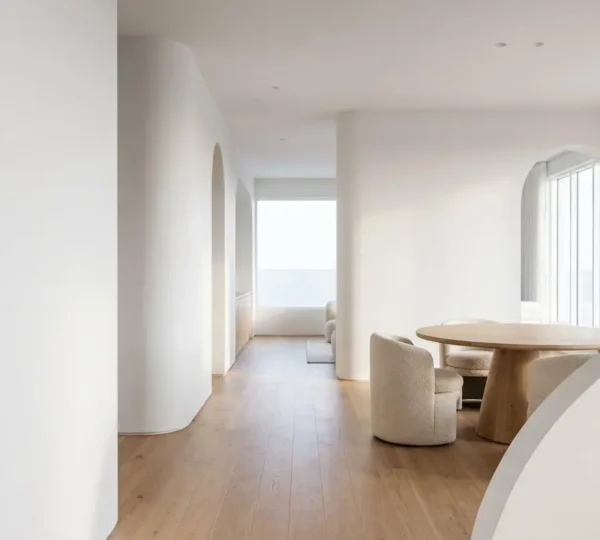
How to Use Fluid Geometry to Soften Modern Interiors?
The key to softening a modern interior is not to scatter curved objects, but to fundamentally reshape the space’s architectural bones with fluid geometry. Move beyond decorative fixes and alter core structures like walls and doorways to create genuine spatial…
Read more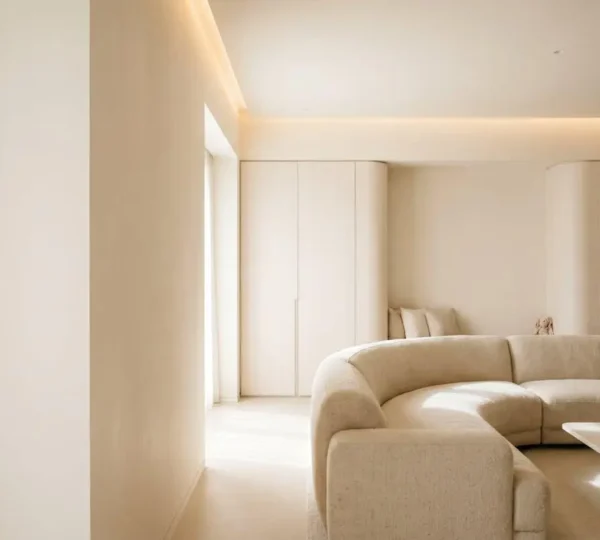
How to Create a Minimalist Aesthetic in a Cluttered Family Home
The secret to a minimalist family home isn’t getting rid of all your kids’ stuff; it’s strategically containing chaos to protect and amplify tranquility. Minimalism in a family setting is an achievable system of organization, not an impossible aesthetic of…
Read more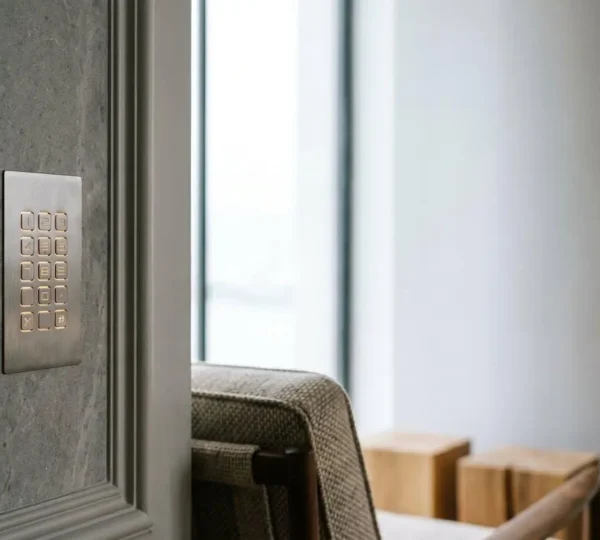
What Is the Difference Between DIY Smart Homes and Professional Domotic Systems?
The true difference between a DIY setup and a professional domotics system is not the devices you see, but the engineered reliability of the infrastructure you don’t. A professional system is built on a hardwired network backbone for flawless, interference-free…
Read more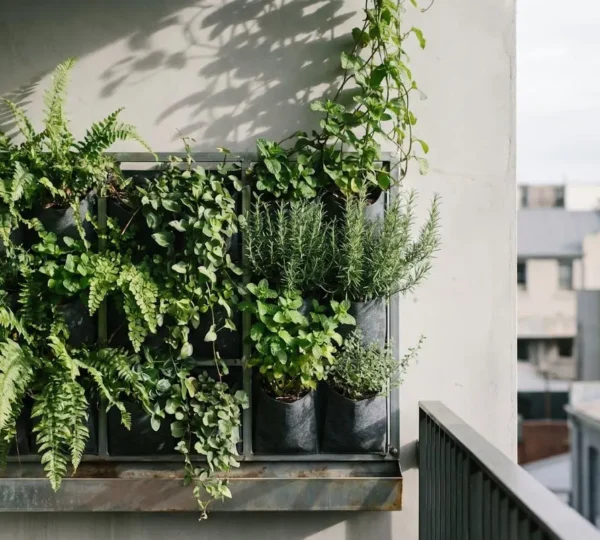
How to Install a Vertical Garden on a Small Balcony or Indoor Wall?
In summary: Successful vertical gardening is less about horticulture and more about engineering. Before planting, you must solve for structural load, water management, and light availability. A living wall is an engineered ecosystem; understanding its physics is the key to…
Read more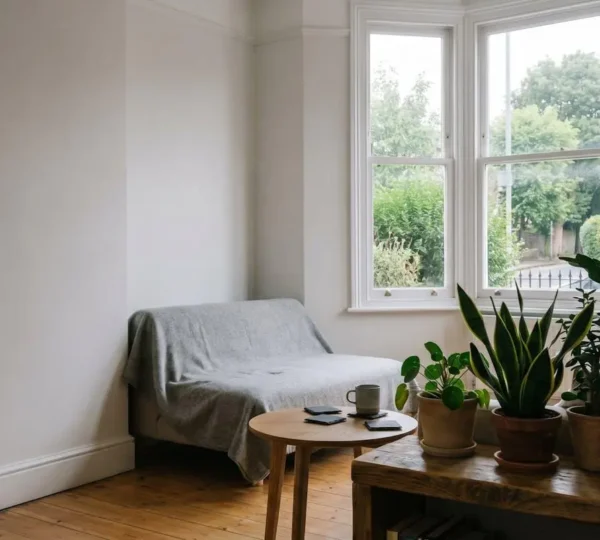
How to Weave Biophilic Design into Your UK Urban Home (Even with No Space or Light)
Contrary to popular belief, you don’t need a jungle of houseplants or a complete renovation to bring restorative biophilic design into your UK flat. The real benefits come from strategically integrating specific natural *cues* that trigger our innate stress-reduction responses….
Read more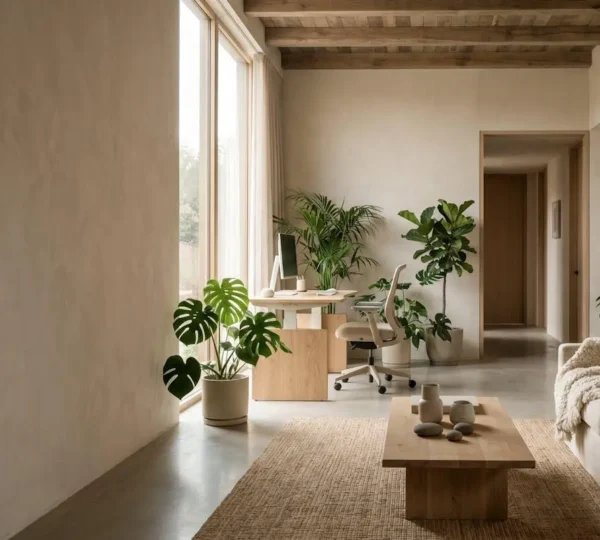
How to Architect Your Home for Maximum Well-being: An Ergonomic Blueprint
In summary: Treat your home as an integrated system, not a collection of objects, where invisible forces like air and sound are actively managed. Focus on dynamic ergonomics, creating an environment that encourages movement rather than static postures, even with…
Read more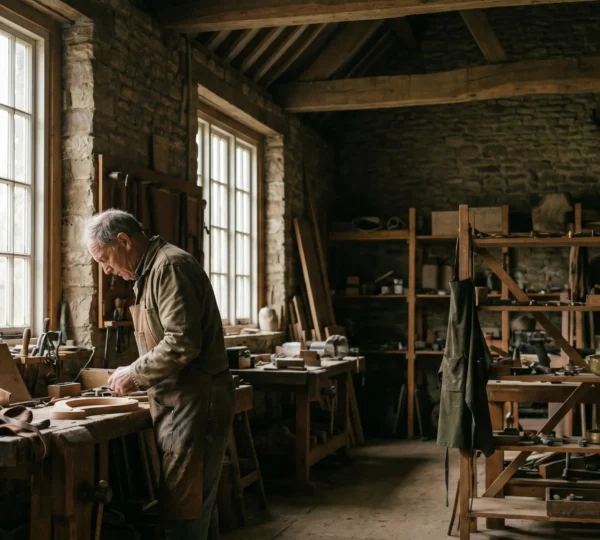
A Curator’s Guide: Where to Find and Commission Master Craftsmen in the UK Today?
Commissioning British craft isn’t an expense; it’s the creation of a future heirloom. It requires shifting your focus from an item’s price to its provenance narrative and material integrity. The true value lies in the object’s ability to be repaired,…
Read more