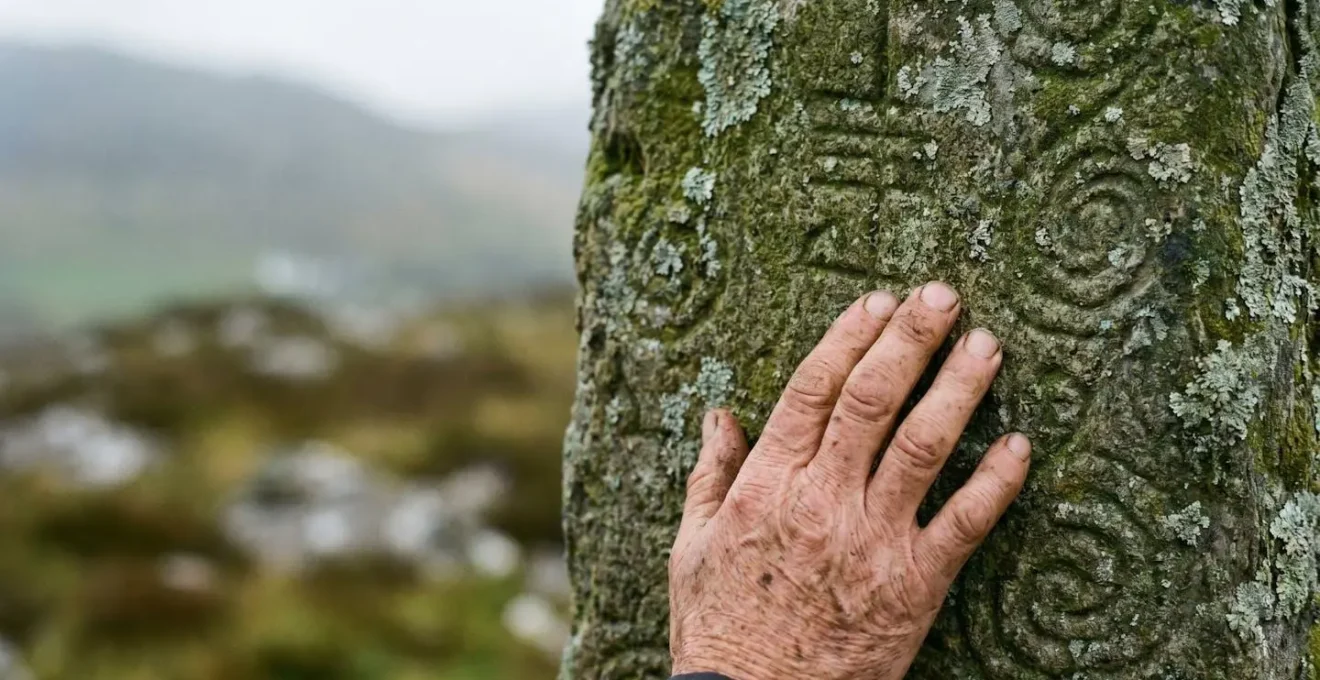
True cultural engagement goes beyond observation; it requires active participation in the living systems that sustain a culture.
- Supporting legally protected crafts like Harris Tweed or resilient agricultural models like crofting provides direct economic solidarity.
- Engaging with a minority language, even at a basic level, is an act of recognising a unique worldview and its struggle for survival.
Recommendation: Shift your mindset from a passive tourist observing history to an active participant contributing to a living, breathing heritage.
The desire for authentic travel often leads us down well-trodden paths: a tour of Edinburgh Castle, a photo of a Cornish pasty, a fleeting attempt to pronounce “Llanfairpwllgwyngyllgogerychwyrndrobwllllantysiliogogogoch.” We collect these experiences like souvenirs, hoping to grasp the essence of the UK’s diverse Celtic and regional identities. While well-intentioned, this approach often treats culture as a static exhibit in a museum—something to be viewed from a safe distance. We learn the “what” but rarely the “why.” We might buy a tartan scarf but remain oblivious to the complex legal and economic structures that protect genuine craftsmanship from mass-produced imitations.
But what if the key to meaningful engagement wasn’t found in a castle’s history but in its present-day community? What if true respect wasn’t just about learning to say “hello” in Welsh, but understanding the political and social victory that every new speaker represents? This guide proposes a shift in perspective, moving away from the passive observation of cultural artefacts towards the active participation in the very systems that keep these cultures alive. This is an anthropological approach to travel, where engagement becomes an act of economic and social solidarity.
By exploring the infrastructure of culture—the language, the festivals, the unique economic models, and the legal frameworks of recognition—we can become more than just visitors. We can become temporary custodians, contributing to the resilience and vibrancy of the very heritage we seek to understand. This journey will take us from the bustling Eisteddfod in Wales to the windswept crofts of the Scottish Highlands, revealing how to interact with these communities not as a consumer, but as a conscious and supportive ally.
This article explores the tangible ways a cultural traveller can move beyond the surface. We will delve into specific examples of living heritage, from language learning and major festivals to the vital economic systems and craft protections that form the backbone of minority cultures across the UK.
Summary: An Anthropological Guide to Britain’s Living Heritage
- Duolingo vs Immersion: What Is the Best Way to Learn Welsh or Gaelic Basics?
- Eisteddfod: What Can You Expect from Europe’s Largest Cultural Festival?
- Crofting Life: Why Is This System Vital for the Scottish Highlands’ Future?
- Harris Tweed: Why Does the “Orb Mark” Matter for Authenticity?
- Cornish National Minority Status: What Does It Mean for Culture and Funding?
- Storytelling Festivals: Where to Hear the Last Keepers of Oral Tradition?
- Stoke-on-Trent: Why Is It Still the World Capital of Ceramics?
- How to Rediscover British Cultural Heritage Beyond the Standard Tourist Trail?
Duolingo vs Immersion: What Is the Best Way to Learn Welsh or Gaelic Basics?
Learning a few phrases of a minority language is a common gesture of respect, but its true value lies not in perfect pronunciation, but in the act of linguistic solidarity. Engaging with Welsh (Cymraeg) or Scottish Gaelic (Gàidhlig) is an acknowledgement that these are not historical relics but vibrant, living languages that carry unique worldviews. While apps like Duolingo provide a practical entry point, the goal should be to connect with the language’s living community. These languages are experiencing a resurgence, with recent data showing a 274% increase in Welsh learners aged 16-24 between 2018 and 2024, demonstrating their contemporary relevance.
The most profound way to engage is by seeking out environments of immersion. This doesn’t necessarily mean enrolling in an intensive course. It can be as simple as visiting a pub in a Gaelic-speaking area of the Hebrides or a café in North Wales and listening to the cadence of conversation, or tuning into a local radio station like BBC Radio Cymru or Radio nan Gàidheal. This active listening moves you from a passive learner to an active witness of the language’s daily life. It also connects you with a growing movement of adult learners, as explained by Welsh Language Cultural Studies in their recent report:
The New Speaker phenomenon represents a large, welcoming community of adult learners who provide a low-pressure, supportive entry point for visitors interested in Celtic languages.
– Welsh Language Cultural Studies, Learn Welsh Statistics Report 2023-2024
This community of “New Speakers” is crucial. They bridge the gap for outsiders, creating spaces where mistakes are welcome and effort is celebrated. Engaging with them at local meetups (`caffi Cymraeg`) or conversation circles transforms language learning from a solitary, app-based exercise into a shared, human experience. It is a direct investment in the intangible infrastructure that keeps a language thriving.
Eisteddfod: What Can You Expect from Europe’s Largest Cultural Festival?
To witness Welsh culture at its most dynamic, one must look beyond the castles and to the National Eisteddfod. This is not a historical re-enactment but a vibrant, week-long celebration of Welsh arts, language, and culture that functions as Europe’s largest competitive festival. It is the pinnacle of living heritage, a place where poetry, music, and performance are not just preserved but actively evolving. The scale is immense; the 2024 festival in Pontypridd was a testament to its enduring appeal, when 186,000 visitors attended the National Eisteddfod, marking one of its highest attendance records.
For a visitor, the Eisteddfod is a full-immersion experience. The main pavilion (`pafiliwn`) hosts the premier competitions, including the prestigious crowning of the Bard. But the soul of the festival is found on the `maes` (the field), a sprawling village of stages, stalls, and tents. Here you can watch contemporary Welsh-language bands, attend literary talks, see theatrical performances, and engage with countless cultural organizations. The entire event is conducted in Welsh, creating a powerful environment that normalises the language as the primary medium of daily life and high art. One of the most visually striking elements is the Gorsedd of the Bards ceremonies, which blend ancient tradition with cultural celebration.
As the image suggests, the Gorsedd ceremonies, with their druidic robes and stone circles, are deeply connected to the Welsh landscape and identity. Attending the Eisteddfod is an act of active participation. You are not just a spectator; you are contributing to an economic and cultural ecosystem that supports artists, writers, and musicians, ensuring that Welsh culture continues to create, innovate, and thrive for future generations.
Crofting Life: Why Is This System Vital for the Scottish Highlands’ Future?
In the Scottish Highlands and Islands, the landscape is dotted with small-scale agricultural holdings known as crofts. To the uninformed eye, crofting might appear to be a simple, historical form of subsistence farming. However, from an anthropological perspective, it is a sophisticated and legally defined system of land tenure that is fundamental to the region’s social, ecological, and economic resilience. It is a cornerstone of cultural economics, an alternative to large-scale industrial agriculture that sustains communities and their unique way of life. Its economic impact is far from small; a recent report found that crofting contributes £588 million in Gross Value Added (GVA) to the Scottish economy annually, supporting over 30,000 jobs.
This system is not just about farming; it’s about a symbiotic relationship between people and the land, fostering biodiversity, maintaining high-quality local food production, and keeping remote communities viable. The efficiency of this model is remarkable. A 2024 analysis revealed that for every £1 of public funds invested in crofting, £13 of GVA is generated for the Scottish economy, an exceptional return that underscores its value. For a cultural traveller, supporting crofting means buying produce directly from a crofter’s gate, staying in accommodation on a working croft, or purchasing goods from businesses that are part of the crofting community. This directs money into the local economy and validates a sustainable way of life.
Case Study: Crofting Resilience During the COVID-19 Pandemic
The strength of the crofting model as a form of unalienated, community-focused practice was highlighted during the global pandemic. A 2024 study in the Journal of Agriculture, Food Systems, and Community Development found that Scottish crofting communities demonstrated remarkable resilience when long supply chains failed. Their engagement in food sovereignty and agroecology not only ensured their own sustenance but also strengthened local food networks and gift economies, showcasing a powerful alternative to dependence on capitalist agriculture.
By engaging with crofting, a visitor is supporting more than a picturesque landscape; they are supporting a proven, resilient socio-economic system that is vital for the future of the Scottish Highlands.
Harris Tweed: Why Does the “Orb Mark” Matter for Authenticity?
Harris Tweed is more than just a high-quality wool fabric; it is a profound example of cultural economics protected by a unique legal framework. For the cultural traveller wanting to support authentic craftsmanship, understanding the significance of the Harris Tweed Orb Mark is paramount. This emblem is not a brand logo; it is a legally binding guarantee of authenticity, representing a rich history of community-based production in the Outer Hebrides of Scotland. As the Harris Tweed Authority proudly states, its protection is unparalleled.
Harris Tweed is the only fabric in the world protected by its own Act of Parliament.
– Harris Tweed Authority, Harris Tweed Act 1993
This Act of Parliament, the Harris Tweed Act 1993, legally defines the fabric: it must be made from 100% pure virgin wool, dyed and spun in the Outer Hebrides, and hand-woven at the home of a weaver in the islands. Only then can it be stamped with the Orb Mark by an inspector from the independent Harris Tweed Authority. This intangible infrastructure protects the livelihoods of islanders from imitation and ensures the preservation of traditional skills passed down through generations. When you buy a product with the Orb Mark, you are not just purchasing a piece of cloth; you are participating in and funding this entire cultural ecosystem.
The intricate process, from the hands that dye the wool to the feet that work the loom, is what gives the fabric its unique character. Choosing genuine Harris Tweed over a cheaper, mass-produced tartan is a conscious economic decision. It is an investment in a community, a craft, and a legally protected piece of Scottish heritage. For the traveller, knowing how to verify this authenticity is a key act of responsible tourism.
Action Plan: How to Verify Authentic Harris Tweed
- Look for the Orb certification mark stamped on the reverse of the fabric – this is the ultimate seal of authenticity applied by independent Harris Tweed Authority inspectors.
- Verify the fabric meets the legal definition: hand woven by islanders at their homes in the Outer Hebrides, finished in the islands, and made from pure virgin wool dyed and spun in the Outer Hebrides.
- Purchase directly from certified mills and independent producers in the Outer Hebrides, or verify retailer credentials through the Harris Tweed Authority website.
- Understand that only cloth bearing the Orb mark can be deemed genuine Harris Tweed – imitations harm the very culture and community you may wish to support.
Cornish National Minority Status: What Does It Mean for Culture and Funding?
In April 2014, the UK government officially recognised the Cornish as a national minority under the Council of Europe’s Framework Convention for the Protection of National Minorities. To an outsider, this might seem like a purely symbolic gesture. For the Cornish people, however, it was a landmark victory, the culmination of decades of campaigning for recognition of their distinct identity, culture, and language. This status is a critical piece of intangible infrastructure that has profound, practical implications for cultural preservation and funding.
This recognition places the Cornish on par with the other Celtic nations of the UK: the Scots, the Welsh, and the Irish. It means that the government has a duty to protect and promote Cornish culture and to combat discrimination. Most significantly, it unlocks access to funding for cultural projects, particularly for the revitalisation of the Cornish language (Kernewek). This has led to increased support for language classes, Cornish-language media, and the use of Cornish in public life, such as on bilingual street signs. The status is a formal declaration that Cornwall’s culture is not simply a regional variation of English culture but a distinct living heritage.
For the cultural traveller, understanding this context transforms a visit to Cornwall. Seeing a bilingual sign is no longer a quaint photo opportunity but a visible symbol of a successful political struggle for identity. Choosing to visit the Gorsedh Kernow (the Cornish Gorsedd), a festival celebrating Cornish culture and language, becomes an act of acknowledging this hard-won status. It shifts the traveller’s perspective from simply enjoying Cornwall’s beautiful coastline to appreciating the deep-rooted cultural identity that is intrinsically linked to that land. It encourages engagement with institutions like the Cornish Language Board (Kesva an Taves Kernewek) and an appreciation for the modern artists, writers, and musicians who are the current custodians of this newly-recognised national culture.
Storytelling Festivals: Where to Hear the Last Keepers of Oral Tradition?
Long before history was written down in books and stored in archives, it was carried in the minds and voices of storytellers. This oral tradition is a powerful form of intangible heritage, a living library of folklore, genealogy, myth, and community memory. In parts of Scotland, Wales, and Ireland, this tradition is still alive, kept burning by modern-day bards and storytellers (`seanchaí` in Irish/Gaelic, `cyfarwydd` in Welsh). For a cultural traveller, seeking out these keepers of oral tradition offers an unparalleled connection to the soul of a place.
This experience is a world away from a guided museum tour. It is raw, immediate, and communal, often taking place in the intimate setting of a pub, a community hall, or around a fire at a festival. The Scottish International Storytelling Festival in Edinburgh is a major hub, but smaller, more local events can be found across the Celtic nations. These gatherings are not formal performances but shared experiences. A storyteller does not simply recite a tale; they weave it, adapting it to the audience and the moment, their voice and gestures painting pictures in the mind. The stories they tell—of mythical heroes like Cú Chulainn or Fionn mac Cumhaill, of local faerie lore, of historical battles and clan rivalries—are the very DNA of the culture.
Engaging with this tradition requires a different kind of listening. It is an active participation in the act of remembering. By being present, you become part of the chain of transmission, helping to ensure these stories are not lost to time. Finding these events often requires looking beyond major tourist websites and instead checking with local arts centres, cultural trusts, or even just asking in a local pub. To sit and listen to a master storyteller is to experience history not as a static text, but as a living, breathing, and deeply human art form.
Stoke-on-Trent: Why Is It Still the World Capital of Ceramics?
While often associated with its industrial past, Stoke-on-Trent’s identity as “The Potteries” is a prime example of a heritage that is very much alive. The city’s claim as the world capital of ceramics is not just a historical slogan; it is rooted in a unique convergence of geology, skill, and continuous innovation that constitutes a form of industrial living heritage. For centuries, the region’s rich deposits of coal and specific types of clay created a natural “terroir” for pottery, attracting generations of artisans and innovators like Josiah Wedgwood and Josiah Spode.
This historical concentration of resources and knowledge created a unique ecosystem that persists today. While many of the industrial giants have downsized, their legacy endures in the highly specialised skills still present in the local workforce. More importantly, this foundation has given rise to a vibrant scene of independent studio potters and small-scale ceramic businesses. These modern artisans are the new custodians of Stoke’s heritage, blending traditional techniques with contemporary design. For the cultural traveller, engaging with this heritage means looking beyond the factory museums, though they are excellent starting points.
True engagement involves visiting the studios of these modern potters, taking a throwing class, or purchasing works directly from the maker. This is cultural economics in action. It supports the next generation of craftspeople and contributes to the economic diversification that is keeping the city’s ceramic identity alive. Events like the British Ceramics Biennial showcase the cutting edge of the art form, proving that Stoke-on-Trent is not just preserving its past but is actively shaping the future of ceramic art. A visit here is a chance to see how an industrial heritage can evolve into a dynamic, creative, and contemporary cultural landscape.
Key Takeaways
- Shift your focus from passive observation of historical sites to active participation in living cultural systems.
- Practice cultural economics by consciously supporting legally protected, authentic products and local artisans.
- Prioritise engagement with contemporary culture—living languages, modern festivals, and current artists—over purely museum-ified history.
How to Rediscover British Cultural Heritage Beyond the Standard Tourist Trail?
The journey to rediscover British cultural heritage begins with a fundamental shift in mindset: from being a consumer of cultural products to an ally of cultural systems. As we have seen, true engagement is not about ticking off a list of sights but about understanding the “why” behind what you see. It’s about recognising that a minority language is a worldview, that a folk festival is a demonstration of contemporary vitality, and that a piece of craft is the end product of a complex economic and social ecosystem. This anthropological approach turns a simple holiday into a meaningful exchange.
This means prioritising economic solidarity. When you choose to buy authentic Harris Tweed bearing the Orb Mark, or purchase food directly from a Scottish croft, you are casting a vote for cultural survival. You are helping to sustain the legal and social structures that protect these communities from the homogenising forces of globalisation. This is a far more powerful act than buying a mass-produced souvenir. It is a direct investment in the people who are the living custodians of that heritage.
It also requires an understanding of the local context and politics. Recognising the significance of the 2014 Cornish national minority status or the ongoing efforts to revitalise the Welsh language adds a layer of depth to your experience. It allows you to see the culture not as a quaint and unchanging tradition, but as a dynamic and often political entity fighting for its place in the modern world. Seek out the living heritage over the purely historical: attend a pub music session, visit a local market, or join a folklore walk. These are the spaces where culture is actively being made, not just remembered.
Ultimately, becoming a more conscious cultural traveller is about curiosity and respect in action. It means asking deeper questions, seeking out authentic experiences, and understanding that your presence and your purchasing power can have a real impact. The next time you plan a trip within the UK, challenge yourself to look beyond the tourist trail and engage with the rich, living, and resilient minority cultures that make this island so diverse.