As a historian and Blue Badge Guide, I have often watched visitors stand in the magnificent halls of a British castle, take a photograph, and move on. There is a sense of awe, certainly, but also a quiet, unspoken disappointment. They have seen history, but have they truly connected with it? The standard tourist trail, a well-worn checklist of palaces, cathedrals, and famous battlefields, often leaves us as spectators, separated from the past by a velvet rope.
The assumption is that to experience heritage, one must visit these monumental sites. Yet, this approach often overlooks the rich, textured, and deeply human stories that lie just beyond the obvious. It misses the tangible connection that comes not from observing a crown jewel, but from feeling the heft of a blacksmith’s hammer, deciphering the spidery script in a parish register, or walking a path trodden by pilgrims for a thousand years.
But what if the key to unlocking Britain’s past wasn’t about where you go, but how you engage? This guide proposes a fundamental shift in perspective: from historical tourist to historical participant. We will explore how to find profound connections not in the grandeur of state rooms, but in the hum of former mills, the solitude of a stone circle, and the living traditions that still echo through the landscape. This is a blueprint for crafting expeditions that allow you to touch, feel, and live the history of these isles.
This article provides a practical framework for that journey. We will delve into specific, actionable ways to engage with Britain’s heritage on a deeper level, moving from theory to immersive practice.
Table of Contents: A Guide to Experiential Heritage
- Industrial Revolution Sites: Why Explore the Mills of the North Instead of Palaces?
- Heritage Crafts: Where to Learn Blacksmithing or Thatching in the UK?
- Stone Circles and Ley Lines: How to Experience Prehistoric Britain Respectfully?
- The Landmark Trust: How Staying in a Folly Helps Preserve Architectural History?
- The Old Way: Why Is Walking a British Pilgrimage Route Good for Mental Health?
- Parish Registers: Why You Must Visit Local Record Offices for Pre-1837 Data?
- Cornish National Minority Status: What Does It Mean for Culture and Funding?
- How to Plan Immersive Expeditions That Bring Ancient British Folklore to Life?
Industrial Revolution Sites: Why Explore the Mills of the North Instead of Palaces?
The grand narrative of Britain is often told through its kings, queens, and aristocrats. Palaces like Hampton Court or Blenheim are magnificent, but they tell a narrow, top-down version of history. To truly understand the forces that shaped modern Britain—and indeed the modern world—you must look elsewhere. The sprawling textile mills of Northern England and the associated industrial landscapes are not just buildings; they are the engines of a global transformation, and their story is one of innovation, social upheaval, and the lives of ordinary people who powered a nation.
Exploring these sites offers a powerful form of historical empathy. Walking through the vast, echoing loom floors of a mill in Lancashire or Yorkshire, you begin to grasp the scale, the noise, and the relentless pace of industrial life. Visiting the workers’ cottages in Saltaire or the Derwent Valley provides a tangible sense of the community structures, social controls, and living conditions that were worlds away from the country estates. This isn’t the history of the 1%; it’s the history of the 99%.
The sheer scale of this heritage is breathtaking and rivals that of aristocratic estates. There are, for example, over 838 listed buildings in the Derwent Valley Mills World Heritage Site alone, encompassing everything from the pioneering mills themselves to the weirs, canals, and communities built to serve them. Choosing to explore this landscape is a conscious decision to engage with a more complex, challenging, and arguably more relevant chapter of British history.
Heritage Crafts: Where to Learn Blacksmithing or Thatching in the UK?
History is not just confined to buildings; it resides in the skills of human hands. For centuries, the character of the British landscape and its architecture was defined by craftspeople. The rhythm of the blacksmith’s hammer, the precise weave of a thatched roof, and the careful carve of the stonemason were the heartbeats of local communities. Today, engaging with these heritage crafts offers one of the most direct and profound ways to connect with the past.
This is not a quaint hobby; it is a vital act of cultural preservation. Many of these skills are critically endangered. According to recent analysis, there are fewer than 10 trained thatchers in Scotland and a desperate need for new practitioners across the board. By seeking out a course or apprenticeship, you are not just learning a skill; you are becoming a link in a chain of knowledge that stretches back for generations. You are ensuring that this tangible part of our history does not become a fossilised exhibit in a museum.
The experience is transformative. To shape hot metal on an anvil or to lay a course of thatch is to understand materials, tools, and processes in a way that no book can teach. It is to feel the physical demands and appreciate the deep, intuitive knowledge of your predecessors.
Organisations like The King’s Foundation, the Heritage Crafts Association, and various local guilds offer everything from taster sessions to immersive, multi-year programmes. The key is to differentiate between a tourist experience and genuine training. A true connection comes from dedicating time, embracing the steep learning curve, and feeling the profound satisfaction of creating something with the same techniques used hundreds of years ago. It is a tangible connection in its purest form.
Stone Circles and Ley Lines: How to Experience Prehistoric Britain Respectfully?
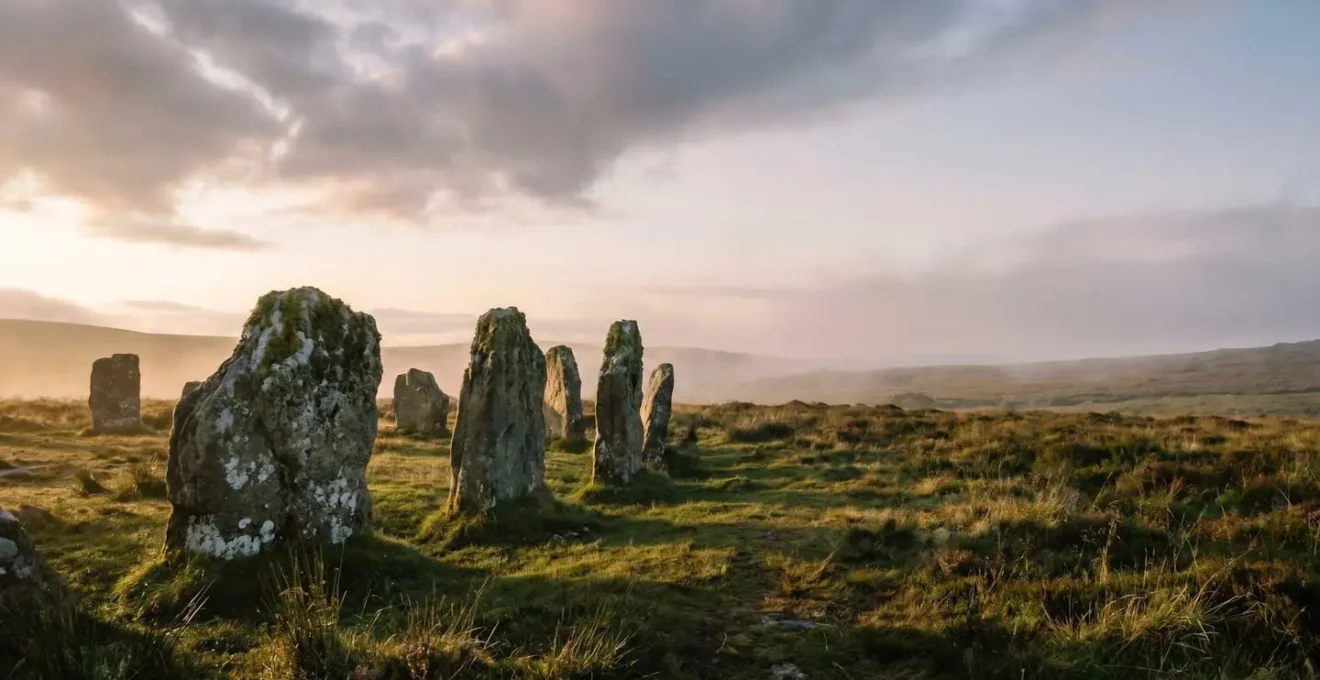
Stepping inside a stone circle is to enter a profoundly ancient space. Sites like Castlerigg, Avebury, and the Rollrights connect us to a past so distant it feels almost mythological. These are not ruins in the conventional sense; they are landscapes deliberately shaped by our Neolithic and Bronze Age ancestors for purposes we can only glimpse—ceremony, astronomy, community gathering. Experiencing them requires a different mindset, one that prioritizes quiet contemplation and respect over simple sightseeing.
The immense age of these monuments is hard to comprehend. Castlerigg, for instance, is one of Britain’s earliest stone circles at approximately 5,000 years old (circa 3200 BC). This incredible antiquity makes them both powerful and fragile. The modern fascination with ley lines, earth energies, and druidism, while often well-intentioned, can place enormous pressure on these delicate sites. The challenge for the modern visitor is to find a personal connection without causing physical harm.
A respectful visit is an informed one. It means understanding that these are not just collections of stones, but complex archaeological sites, often including sacred burials. It means being conscious of the physical impact of your visit, from soil erosion caused by straying from paths to the permanent damage caused by seemingly harmless offerings. Many spiritual visitors leave candles, whose wax can stain and damage the ancient stone surfaces, or scatter the ashes of loved ones, creating ethical conflicts with the preservation of prehistoric cremation burials.
To experience these places authentically, one must adopt a code of conduct that goes beyond “leave no trace.” Consider the following principles for your visit:
- No Deposits: Avoid leaving any materials, including candles, crystals, or modern offerings. The best gift is your respect.
- Respect the Dead: Acknowledge that many circles are ancient burial grounds. Treat them with the solemnity you would any cemetery.
- Follow Managed Access: For major events like solstices, use the official, managed access provided by organisations like English Heritage to balance celebration with conservation.
- Stay on the Path: At sites with designated paths, stick to them. This prevents erosion that can damage not just the ground but buried archaeological features.
- Look, Don’t Touch (If Advised): While many sites allow contact, be aware of signage. The desire to touch a 5,000-year-old stone is powerful, but preservation must come first.
The Landmark Trust: How Staying in a Folly Helps Preserve Architectural History?
What if you could do more than just visit a historic building? What if you could live in it? This is the transformative proposition offered by organisations like The Landmark Trust. They provide a unique model for heritage preservation that turns visitors into active participants in the survival of Britain’s most unusual and at-risk architectural gems. Instead of a hotel room, your accommodation becomes a medieval gatehouse, a Gothic-revival folly, a remote fort, or even a converted pigsty.
This experience goes far beyond a typical holiday. By choosing to stay in a Landmark property, you are directly funding its continued existence. The rental income is channelled back into the meticulous maintenance and restoration of the building, creating a sustainable, self-fuelling cycle of preservation. It’s a genius solution for what are often called “architectural misfits”—buildings too small, too strange, or too remote for commercial or state-run heritage models.
Case Study: The Landmark Trust’s Sustainable Preservation Model
Founded in 1965, The Landmark Trust has rescued over 200 historic buildings that were on the brink of ruin. The model is simple: rescue vulnerable historic buildings, restore them using traditional craft skills, and let them for self-catering holidays. This income then pays for future maintenance and new rescue projects. The buildings saved are often those no one else will touch—from the magnificent, isolated Appleton Water Tower to the eccentric Pineapple folly in Scotland. This approach not only saves the buildings but also supports a wide ecosystem of specialist craftspeople, creating a virtuous circle of preservation that has protected unique pieces of British history for over half a century.
Staying in a folly—a purely ornamental and often eccentric building—is perhaps the ultimate expression of this idea. You are inhabiting a piece of architectural whimsy, a structure built for delight rather than function. Your temporary residence within its walls ensures it can continue to delight future generations. It’s an immersive, comfortable, and deeply effective way to become a patron of architectural history.
The experience allows for a slow, intimate connection. You notice the details: the worn stone of the spiral staircase, the pattern of light through a Gothic window, the way the structure settles at night. You are not a tourist passing through; for a few days, this small piece of history is your home.
The Old Way: Why Is Walking a British Pilgrimage Route Good for Mental Health?
In our fast-paced, digitally saturated world, the simple act of walking has become a radical one. To deliberately slow down and traverse the landscape on foot, following an ancient path, is to tap into a powerful and primal human experience. British pilgrimage routes, whether ancient Christian paths like the Pilgrim’s Way to Canterbury or older, prehistoric processional ways, offer more than just physical exercise; they are journeys for the mind and spirit.
Walking a long-distance path is a form of active meditation. The rhythmic, repetitive nature of walking calms the nervous system. The mind, freed from the constant barrage of notifications and demands, begins to wander, process, and settle. You become acutely aware of the world around you: the changing light, the sound of the wind in the trees, the feel of the earth beneath your feet. It is a profound act of mindfulness, connecting you to both your inner landscape and the physical one you inhabit.
There is a scientific basis for this feeling of well-being. Research suggests that unique neurological flow states are created by historic walking routes like those connecting Neolithic sites such as the West Kennet Avenue near Avebury. The very act of moving through a landscape designed for procession and ritual thousands of years ago can induce a state of heightened awareness and deep focus. You are not just walking; you are participating in a ritual, your footsteps echoing those of countless people who walked the same path with their own hopes, fears, and intentions.
The British Pilgrimage Trust and other organisations are rediscovering and mapping these “Old Ways,” making them accessible to modern walkers. The journey becomes the destination. You carry your own “burdens,” whether physical or metaphorical, and find that the steady act of moving forward, day after day, can bring clarity, resilience, and a powerful sense of accomplishment that a fleeting visit to a monument can rarely provide.
Parish Registers: Why You Must Visit Local Record Offices for Pre-1837 Data?
For anyone with an interest in their British ancestry, the year 1837 is a great dividing line. It marks the start of civil registration of births, marriages, and deaths, making records relatively easy to access online. But to venture before this date is to enter a different world: the world of the parish register. These documents, kept by the local church, are the primary source for family history for nearly 300 years, and for the most part, they are not digitised. To access them, you must embark on a pilgrimage of a different sort: a visit to a County Record Office.
This is where genealogy transforms from a digital search into a physical quest. There is a unique thrill to sitting in the quiet of a record office, handling a large, vellum-bound volume that was first used in the reign of Elizabeth I or James I. The moment you find an ancestor’s name—their baptism, marriage, or burial, recorded in ink by a parish clerk centuries ago—is a moment of profound and tangible connection. You are touching the same page they may have touched, reading a record created at a pivotal moment in their life.
But a successful visit requires preparation. These are not public libraries; they are archives, and their resources are best utilised with a clear plan. An archivist’s time is precious, and arriving with specific questions will yield far greater results than a vague “I’m researching the Smith family.” You must become a detective, piecing together clues and learning to read between the lines of the registers, spotting clues in the records of occupations, literacy (a signature versus a mark), and even epidemics visible through clusters of burials.
Your Action Plan: Maximising a Local Record Office Visit
- Book and Prepare: Secure an appointment 2-4 weeks in advance. Clearly state your research goals so archivists can prepare relevant parish registers and advise on document availability.
- Formulate Questions: Arrive with a list of specific questions. Instead of “Tell me about this family,” ask “Can you recommend other documents, like tithe maps or wills, for this parish between 1750 and 1780?”
- Consult the Archivist: Tap into their expertise. Ask for recommendations on complementary sources—quarter sessions records, manorial documents, or poor law records—that can add rich context to the names and dates.
- Learn to Read the Social Clues: Train your eye to interpret the data beyond genealogy. Notice clusters of burials (epidemics), the switch from marks to signatures (rising literacy), and recorded occupations (local economy).
- Handle with Care: Follow archival protocol strictly. Use only pencils, ensure your hands are clean, use provided document weights, and opt for photography over photocopying to protect fragile materials.
Key Takeaways
- Shift your mindset from a passive spectator to an active participant to forge a deeper connection with history.
- True heritage is found not just in buildings, but in the living skills, ancient journeys, and personal stories that shaped Britain.
- A tangible connection—touching the stone, working the metal, walking the path—is the key to developing genuine historical empathy.
Cornish National Minority Status: What Does It Mean for Culture and Funding?
Heritage is not always about the distant past; it can be a living, breathing, and fiercely contemporary force. Nowhere is this more evident than in Cornwall, where the recognition of the Cornish as a National Minority in 2014 has profound implications for how visitors experience the region’s culture. This isn’t just about preserving ancient monuments; it’s about supporting a distinct and evolving identity in the 21st century.
This official status, granted under the Council of Europe’s Framework Convention for the Protection of National Minorities, is more than symbolic. It obliges the government to recognise and support Cornish culture, traditions, and language. For the traveller, this means Cornwall offers an experience that goes far beyond picturesque fishing villages and pasties. You are entering a region undergoing a cultural renaissance, where a unique identity is being actively asserted and celebrated.
Case Study: The Revival of Kernewek and Living Culture
The impact of National Minority status is most visible in the revival of the Cornish language, Kernewek. What was once purely a subject for historians is now a living language. You will see it on bilingual street signs, hear it on local radio, and find it taught in schools. This status unlocks specific funding and frameworks that support cultural festivals like the Gorsedh Kernow, as well as contemporary Cornish music, film, and literature. For a visitor, this means you are not just consuming a re-enacted, “tourist-friendly” version of heritage. You are encountering a genuine, evolving culture that is using its official recognition to assert its uniqueness within the UK, adding a deep layer of political and social context to the symbols, flags, and attitudes you encounter.
Engaging with this living heritage requires an open and curious mind. It means seeing the St Piran’s flags not as a novelty, but as a political statement. It means seeking out contemporary Cornish music or art, or perhaps even learning a few words of Kernewek. It’s an opportunity to witness culture not as a static artefact, but as a dynamic, ongoing conversation between the past, present, and future.
How to Plan Immersive Expeditions That Bring Ancient British Folklore to Life?
The British landscape is haunted by stories. Every coastline, forest, and moor is layered with myths, legends, and folk tales. These stories of phantom dogs, fairy queens, and sleeping kings are as much a part of our heritage as any castle wall. But how do you experience this intangible heritage? The key is to let the story be your guide, planning an expedition that uses folklore as a map to the real world.
This approach, which I call the “Story-First Method,” flips conventional travel planning on its head. Instead of choosing a destination and seeing what stories are there, you choose a story and let it lead you to the destinations. For example, instead of “Let’s go to East Anglia,” you decide, “Let’s follow the trail of Black Shuck.” This immediately gives your journey a narrative spine and a sense of purpose.
Your research then becomes a treasure hunt, plotting the real-world locations from the myth—the specific churches Black Shuck was said to have burst into, the coastal paths he prowls. By using tools like the National Library of Scotland’s historical map overlays, you can see how the landscape has changed, tracing ancient trackways and lost villages mentioned in the lore. You are literally peeling back the layers of time, connecting the myth to the physical ground.
The final step is to build a multi-sensory itinerary. For each location, find associated elements. Is there a local folk music session in a pub mentioned in a ballad? A regional recipe connected to a harvest custom? A particular type of stone or plant central to the legend? By engaging all your senses, the folklore ceases to be an abstract tale and becomes a rich, lived experience. You’re not just visiting a place; you’re stepping into the world of the story itself, feeling the same misty air and walking the same gnarled paths as the figures from the tales.
Your own expedition into Britain’s past awaits. The true heritage of these isles is not a static display in a glass case; it is a story waiting for you to step into, a skill waiting to be learned, a path waiting to be walked. The only question is, where will you begin?