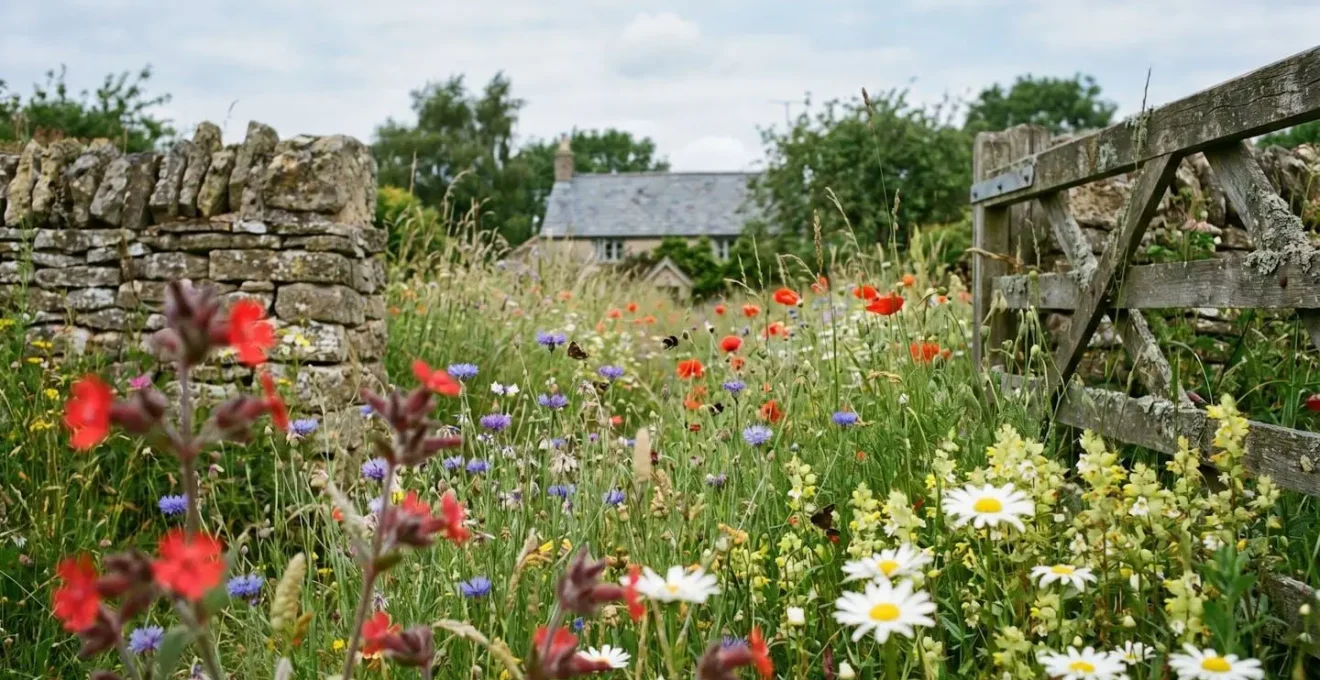
Creating a resilient, wildlife-friendly UK garden isn’t just about choosing native plants—it’s about choosing the right native plants with local genetic integrity.
- True resilience comes from understanding that a garden is an ecosystem, where soil health, plant genetics, and wildlife are interconnected.
- Prioritising plants of local provenance ensures they are perfectly adapted to your specific climate and soil, reducing failure rates and maintenance.
Recommendation: Before buying any “native” plant, use the provided checklists to ask nurseries about seed origin and local provenance to build a garden that truly thrives.
For the gardener weary of high-maintenance beds and increasing water bills, the call to “plant natives” sounds like a perfect solution. It promises a garden that’s not only beautiful but also a haven for local wildlife and more resilient to the UK’s changing climate. The common advice is to swap out exotic ornamentals for species that have grown on these isles for millennia. We’re told to plant for pollinators, create wildflower patches, and watch as nature does the work for us.
Yet, many who follow this advice find themselves frustrated. The wildflower patch fails to establish, the “native” plants struggle, and the promised biodiversity doesn’t quite materialise. But what if the secret to a thriving, low-impact garden lies a level deeper? What if the true key is not just planting “native,” but embracing a system-based approach that considers the very genetic origin of your plants, the health of your soil’s invisible network, and the specific role your garden plays in the wider landscape?
This guide moves beyond the platitudes. It will equip you with the specialist knowledge to make informed choices, transforming your garden from a collection of plants into a functioning, resilient, and deeply interconnected ecosystem. We will explore the critical difference between ‘native’ and ‘naturalised’, the science of seed provenance, and how to apply these principles from the smallest urban balcony to the largest lawn.
To navigate this deep dive into ecological gardening, we have structured the article to build your expertise step by step. The following summary outlines the key areas we will cover, from the foundational science to practical, actionable strategies for your own space.
Summary: Why Should You Choose Indigenous Flora for Your UK Garden?
- Native vs Naturalized: What Is the Difference and Does It Matter for Bugs?
- Wildflower Meadows: How to Turn a Lawn into a Pollinator Paradise?
- Local Provenance: Why Seed Origin Matters for Resilience?
- The Right Tree in the Right Place: Why Planting on Peat Is a Mistake?
- Ash Dieback: How to Manage Native Trees Under Threat from Imported Disease?
- NASA Plants: Which Houseplants Actually Clean the Air in Your Bedroom?
- Ferns vs Succulents: Which Plants Survive Best on a North-Facing Wall?
- How to Integrate Biophilic Design Principles into a UK Urban Home?
Native vs Naturalized: What Is the Difference and Does It Matter for Bugs?
The first step in building a resilient garden is to understand the language we use. A ‘native’ plant is one that arrived in the UK without human assistance and has been part of the landscape since the last Ice Age. A ‘naturalised’ plant was introduced by humans but now grows wild and reproduces on its own, like the sycamore or buddleja. While both can have some wildlife value, the distinction is critical for building a robust ecosystem.
Native insects, from butterflies to beetles, have co-evolved with native flora over thousands of years. Their life cycles, feeding habits, and very survival are intricately tied to these specific plants. Many insects are specialists, meaning they can only feed on a very limited range of host plants. For them, a naturalised or exotic species is like an empty larder. This isn’t just theory; it’s a matter of ecological fact.
Indeed, research shows that British native plants support the widest range of invertebrates. The RHS’s comprehensive four-year Plants for Bugs study found that while plants from the wider northern-hemisphere could be beneficial, they still supported 10% fewer invertebrates than their UK native counterparts. This demonstrates a clear ecological hierarchy where local natives provide the most comprehensive support for the base of our food web.
This deep connection extends below the ground. Native plants have evolved in partnership with the UK’s specific soil types and the vast, invisible network of mycorrhizal fungi. This symbiotic relationship helps plants access water and nutrients, making them more resilient to drought and disease—a crucial advantage in a changing climate. Choosing native species is the first step to restoring this “hidden half” of your garden’s ecosystem.
As this image illustrates, the intricate web of roots and fungal threads is the true foundation of a healthy garden. By prioritising UK native species, you are not just planting a flower; you are plugging into an ancient, highly efficient ecological network. This creates a self-sustaining system that requires less intervention, less watering, and provides more for local wildlife.
Wildflower Meadows: How to Turn a Lawn into a Pollinator Paradise?
The manicured lawn is a deeply ingrained part of the British garden aesthetic, yet it’s often an ecological desert. Converting even a small part of it into a wildflower meadow is one of the most impactful changes a gardener can make. This is not just a romantic notion; it’s an urgent act of ecological restoration, given that an estimated 97% of UK wildflower meadows have been lost since the 1930s. This staggering loss has had a devastating effect on pollinators and the many other species that depend on these complex habitats.
Creating a meadow isn’t as simple as scattering a packet of seeds on your existing lawn. Success depends on reducing the fertility of the soil, as grasses thrive in nutrient-rich conditions and will outcompete the wildflowers. The first step is to remove the existing turf or, for a slower method, to introduce a hardy native perennial like Yellow Rattle (Rhinanthus minor), known as the “meadow maker.” This plant is semi-parasitic on grass roots, weakening them and creating space for wildflowers to establish.
The results of such a conversion can be dramatic and swift, providing a powerful argument against the monoculture of a traditional lawn. A compelling example comes from one of the UK’s most iconic landscapes.
Case Study: King’s College Cambridge Meadow Conversion
In 2019, King’s College Cambridge made the bold decision to convert a portion of its famous lawn into a wildflower meadow. A study of the project confirmed its success, finding that the new meadow supported approximately three times more plant, spider, and bug species than the remaining lawn. Furthermore, bats, which feed on insects, were recorded foraging over the meadow far more frequently. This case study from a small, 0.36-hectare plot proves that meadow creation delivers substantial biodiversity benefits and reduces maintenance costs compared to a conventional lawn.
This evidence shows that transforming a lawn is not about letting your garden “go wild,” but about actively curating a more complex, resilient, and vibrant habitat. It replaces the high inputs of mowing, feeding, and watering with the high outputs of biodiversity, seasonal interest, and ecological function. A meadow brings your garden to life, connecting it to the wider landscape and providing a critical refuge for species under threat.
Local Provenance: Why Seed Origin Matters for Resilience?
We’ve established that ‘native’ is better. But the next, most crucial level of understanding for a resilient garden is the concept of local provenance. This means that not all native plants are created equal. A native wild carrot plant grown from seed collected in Kent has a different genetic makeup to one collected in Cumbria. They are adapted to the subtle differences in climate, soil, and day length of their specific region.
This genetic integrity is the key to true resilience. A plant with local provenance is pre-programmed to thrive in your area. As experts in the field note, this genetic makeup ensures they are better adapted to local conditions, from soil type to rainfall patterns and wind speeds. To manage this, the UK is split into 24 native seed zones, which help growers and gardeners source plants that are truly ‘local’.
Unfortunately, the horticultural trade often overlooks this. Many “UK native” plants sold in garden centres are grown from cheaper, mass-produced seed from continental Europe, or are agricultural cultivars bred for uniformity, not ecological function. These plants may not flower at the right time for local pollinators and are often less resilient to local pests and diseases. Asking about provenance is therefore not a trivial question; it’s the most important question you can ask when sourcing plants for an ecological garden. To ensure you’re getting the real deal, you need to become an informed consumer.
Your Checklist for Verifying Plant Provenance:
- Ask about origin: Enquire if the plant is seed-grown from varied local stock. This promotes genetic diversity, unlike identical clones which create fragile monocultures.
- Pinpoint the seed source: Ask where the seed for the plant was originally collected. Ideally, it should be from within your native seed zone or a region with a similar climate.
- Look for certification: Check if the plant is certified by a scheme like Flora Locale. This guarantees genuine British native origin over imported stock or agricultural varieties.
- Observe plant characteristics: Be aware that agricultural varieties of natives (like some clovers) may flower at different times or have a different structure, making them less suitable for co-evolved local pollinators.
By using this checklist, you shift your role from a passive buyer to an active participant in conservation. You are voting with your wallet for a more transparent, ecologically responsible horticultural industry and ensuring the plants you bring home have the best possible chance of creating a truly resilient and interconnected garden ecosystem.
The Right Tree in the Right Place: Why Planting on Peat Is a Mistake?
The mantra of “plant more trees” is a powerful and positive one, but it can be dangerously oversimplified. For an action to be truly beneficial, it must follow the core ecological principle of “the right tree in the right place.” Nowhere is this more critical than in relation to the UK’s peatlands. These precious, water-logged landscapes are our largest terrestrial carbon store and a unique habitat in their own right.
Peatlands are not simply empty spaces waiting for trees. They are a functioning, vital ecosystem. Healthy peatland is a carbon sink, meaning it actively absorbs CO2 from the atmosphere. In fact, peatland habitats hold the largest carbon stores of all UK habitats. However, when they are damaged—for example, by draining them to plant trees—they flip from a carbon sink to a massive carbon source, releasing centuries of stored carbon back into the atmosphere. Planting trees on healthy peatland is a profound ecological mistake.
The history of UK land management provides a stark warning against this kind of misplaced environmental effort. The drive to increase forestry cover in the mid-20th century led to policies that had severe, long-lasting consequences.
Case Study: The Afforestation of Scotland’s Flow Country
In the decades following the 1950s, huge swathes of the Flow Country in Scotland—one of the world’s most extensive blanket bogs—were drained and planted with non-native conifer monocultures, driven by government tax incentives. This policy was an ecological disaster. It destroyed the unique peatland habitat, harmed wildlife, and, as we now understand, likely turned a vast carbon sink into a carbon source. As analysis of historic land-use change shows, policies have since been reversed to prevent planting on deep peat, and huge efforts are now underway to restore the damage by removing the trees.
This case study serves as a critical lesson. Our aim should not be to impose one type of “good” habitat (forest) onto another (peatland). It should be to protect and restore the integrity of each ecosystem. For the gardener, this translates to understanding your local context. If you live near peatland, your most valuable contribution is to support its preservation, not to plant trees on it. For everyone, it reinforces the principle that ecological gardening is about working with, not against, the landscape and its history.
Ash Dieback: How to Manage Native Trees Under Threat from Imported Disease?
The devastation of Ash Dieback (Hymenoscyphus fraxineus) across the UK is a heartbreaking example of the vulnerability of our native trees to imported diseases. It highlights the risks of a globalised horticultural trade and underscores the urgent need for resilience in our gardens and wider landscapes. While we cannot stop the spread of the disease, we can manage our response in a way that fosters a healthier, more diverse woodland ecosystem for the future.
The temptation may be to clear-fell affected ash trees, but a more nuanced, ecological approach is to think about successional planting. This involves planning for the future by planting a diverse mix of other native tree species that can fill the gaps left by the ash. Instead of a monoculture that is vulnerable to a single threat, this strategy creates a multi-layered, mixed-age woodland structure that is far more resilient to future diseases and climate shocks.
Species like hornbeam (Carpinus betulus), small-leaved lime (Tilia cordata), and hazel (Corylus avellana) are excellent candidates for this successional approach. They provide different structural forms, food sources, and habitats, enriching the overall biodiversity of the area. Leaving some deadwood from fallen ash (where safe to do so) is also a crucial part of the process, as it provides essential habitat for fungi, invertebrates, and nesting birds. This approach turns a crisis into an opportunity to build back better and more diversely.
This image of a thriving, mixed native woodland shows the goal of successional planting. The variety in tree species, age, and structure creates a robust and dynamic ecosystem. By emulating this in our own planting schemes, we can move away from reactive crisis management and towards a proactive strategy of building long-term ecological resilience. It is a powerful reminder that in nature, loss in one area can be the catalyst for growth and diversification in another.
NASA Plants: Which Houseplants Actually Clean the Air in Your Bedroom?
The idea that houseplants can purify the air in our homes is a popular and appealing one, largely stemming from a famous NASA study from 1989. This has led to countless articles promoting specific “air-purifying” plants for our bedrooms and offices. However, the reality is that the original study was conducted in a small, sealed chamber—a far cry from a typical, draughty UK home. More recent research has shown that you would need an impossibly dense jungle of houseplants to have any meaningful impact on indoor air quality.
While houseplants are wonderful for our mental well-being and connection to nature, relying on them to clean the air is a myth. For a truly effective solution, we need to think like an ecologist and look outside the window, not just at the windowsill. The most effective way to improve indoor air is to improve the air in the immediate vicinity of your home before it even enters.
This is where native plants offer a powerful, evidence-based solution. As multiple UK native plant experts recommend, the most effective way to improve air quality is to use plants to filter the external environment. A dense native hedge or a covering of a native climber can act as a highly effective “green lung” for your home.
The most effective way to improve air quality in your home is to improve the air around your home using native climbing plants like Ivy or planting a dense native hedge like Hawthorn to effectively filter airborne particulates and pollutants from the local environment before they even reach your window.
– Multiple UK Native Plant Experts, Native Plants for UK Gardens – Evidence-Based Recommendations
Plants like native Hawthorn (Crataegus monogyna) and Ivy (Hedera helix) have a vast, complex leaf surface area that is incredibly efficient at trapping airborne particulates from traffic and other pollution sources. By planting them strategically around your property, you create a natural, living filter that cleans the air for your household and the local neighbourhood, all while providing invaluable food and shelter for wildlife. This is a system-based solution that delivers far greater benefits than an isolated pot plant ever could.
Ferns vs Succulents: Which Plants Survive Best on a North-Facing Wall?
A north-facing wall can seem like a challenging space for a gardener—low light, dampness, and cold winds can be the norm. The popular trend for succulents and other sun-loving plants leaves these spaces neglected. However, for the ecological gardener, a north-facing wall is not a problem; it’s a golden opportunity to embrace the unique beauty and resilience of the UK’s native shade-loving flora.
Instead of trying to force plants to grow in unsuitable conditions, the key is to look to the native species that have evolved specifically for these environments. British woodlands are full of plants that thrive in the cool, damp shade, and many of them are perfectly suited to creating a lush, green tapestry on a vertical surface. Ferns, mosses, and certain flowering plants from these habitats will feel perfectly at home on a north-facing wall, requiring minimal intervention once established.
This approach provides year-round interest and creates a valuable micro-habitat that supports a different range of wildlife compared to a sunny wall. It is the ultimate expression of “right plant, right place,” turning a perceived limitation into a unique garden feature. The following list provides a starting point for creating your own native shade garden on a vertical surface.
Your Palette for a Native North-Facing Wall Garden:
- Hart’s-tongue Fern (Asplenium scolopendrium): A true star of the shade garden, this evergreen fern offers architectural, strap-like fronds and thrives in damp, shaded conditions. It’s one of around 60 indigenous fern species in the British Isles.
- Native mosses: Don’t fight them, encourage them. Mosses will naturally colonise north-facing surfaces, creating stunning living tapestries with zero maintenance, while retaining moisture and creating microhabitats.
- Welsh Poppy (Meconopsis cambrica): A cheerful plant that tolerates shade well, producing bright yellow or orange flowers. It readily self-seeds into wall crevices and damp corners.
- Male Fern (Dryopteris filix-mas): This classic native fern brings a robust, woodland character to shaded walls and borders, asking for little more than a damp environment to flourish.
- Common Ivy (Hedera helix): An ecological powerhouse, providing year-round shelter for insects and birds, and a crucial late-season source of nectar for pollinators when little else is in flower.
By selecting from this palette, you are not just decorating a wall; you are recreating a slice of native woodland habitat. You are choosing to celebrate the subtle beauty of shade-loving species and creating a garden feature that is both resilient and deeply connected to its place.
To Retain:
- True resilience is built on local provenance; always prioritise plants grown from seed sourced from your local region over generic “natives”.
- A garden is a system: focus on building healthy soil and embracing diversity rather than just collecting individual plants.
- Work with your site, not against it. Choose plants adapted to your specific conditions, whether it’s a shady wall or a damp lawn, to create a low-maintenance, high-impact garden.
How to Integrate Biophilic Design Principles into a UK Urban Home?
Having explored the principles of creating a resilient, native ecosystem outside, the final step is to consciously connect that ecosystem to our indoor lives. This is the essence of biophilic design: the practice of connecting humans with nature within the built environment. Done thoughtfully, it goes beyond simply adding a few houseplants; it’s about creating meaningful, place-specific connections to the local environment.
For a UK urban home, this means using native flora to blur the boundaries between inside and out. It’s about framing a view of a native tree, creating a micro-meadow on a balcony that mirrors the seasonal changes of the local landscape, or planting a window box that attracts the specific bee species native to your area. This approach fosters a deeper appreciation for the local ecology and reinforces our sense of place.
This “place-based biophilia” transforms our homes from sealed boxes into permeable membranes that interact with the local ecosystem. It allows us to experience the small, daily dramas of nature—a bee visiting a primrose, the changing bark of a silver birch, the scent of wild thyme—from the comfort of our homes. This creates a powerful, restorative connection that is far more profound than that offered by an exotic houseplant from a different continent.
A Place-Based Biophilia Toolkit for UK Homes:
- Native wildflower window box: Plant species like primroses (Primula vulgaris) and red campion (Silene dioica) to attract some of the 250+ bee species native to the UK.
- Framed native tree view: Position furniture to create a deliberate view of a local native tree like a silver birch (Betula pendula), encouraging observation of its seasonal changes.
- Balcony micro-meadow: Use a container to grow UK native species like oxeye daisy (Leucanthemum vulgare) and native grasses to observe a miniature seasonal succession.
- Native sensory elements: Incorporate aromatic UK natives like wild thyme (Thymus polytrichus) on a balcony or near a window to engage your sense of smell with the local flora.
- Indoor-outdoor corridor: Use a native climber like honeysuckle (Lonicera periclymenum) to grow up a wall and around a window, creating a visual and ecological bridge between your garden and your home.
By implementing these ideas, your home becomes an observatory for the resilient, native ecosystem you have cultivated. It completes the circle, bringing the benefits of your ecological gardening efforts—the biodiversity, the seasonal rhythms, the sense of place—right into the heart of your daily life. This is the ultimate goal: a garden and a home that are not separate entities, but a single, integrated, and resilient system.
Now that you are equipped with the principles of creating a truly resilient, native UK garden, the next step is to apply them. Start by assessing your own space and using these checklists to guide your next visit to a nursery or garden centre, and begin the journey of transforming your garden into a thriving ecological haven.