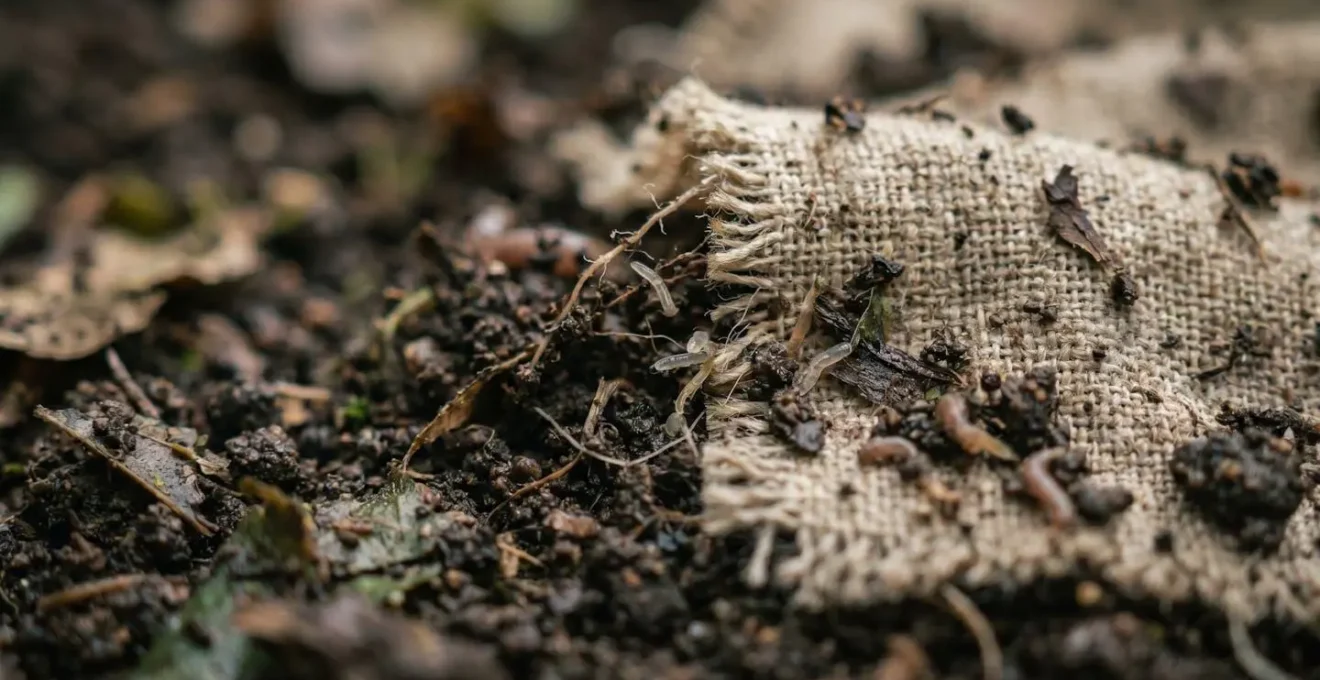
Contrary to popular belief, a “100% natural” label does not guarantee a garment is safe for your home compost pile.
- Most clothing contains hidden plastics like polyester thread, synthetic labels, and toxic chemical dyes that contaminate soil.
- Fabrics like Tencel™ are compostable under industrial conditions but break down too slowly in a typical garden compost heap.
Recommendation: Before composting any garment, perform a “component autopsy” to remove all synthetic parts and verify the fabric’s purity.
For a gardener who loves fashion, the idea of returning a well-worn t-shirt to the earth is a beautiful final chapter. The thought of your old clothes breaking down into rich, nutrient-dense humus for your vegetable patch embodies a perfect closed-loop system. The common advice seems simple enough: stick to natural fibers like cotton or linen, cut them up, and toss them in the compost bin. Many guides suggest this is the straightforward path to sustainable disposal.
However, from a compost technician’s perspective, this simplistic view is not only incomplete but potentially harmful to the very soil you’re trying to nurture. The reality is that modern garments are complex assemblies of materials. The “natural” fabric is often just one component in a product laden with hidden, non-biodegradable elements. The true key to safely composting clothing lies not in the fiber itself, but in a forensic understanding of everything else that makes up the garment.
But what if the real barrier to composting clothes isn’t the fabric, but the polyester thread holding it together, the synthetic care label, or the toxic heavy metals used to fix the dye? This guide moves beyond the fiber-deep platitudes. We will conduct a technical breakdown of what truly makes a fabric compostable at home, exploring the pitfalls of modern manufacturing and providing a clear framework for ensuring your clothes feed your garden, rather than contaminate it.
This article will guide you through a systematic check of your garments. We will analyze everything from fiber decomposition rates and hidden plastics in “vegan” leather to the chemicals in dyes and the ubiquitous problem of synthetic thread. By the end, you will have the technical knowledge to confidently decide if a garment can truly return to the earth.
Contents: A Technician’s Breakdown of Compostable Fashion
- Polyester vs Tencel: How Long Does It Take to Decompose in Landfill?
- Mushroom Leather vs PU Leather: Which Is Truly Biodegradable?
- Natural Dyes: Can You Have Vibrant Colors Without Toxic Chemicals?
- The Thread Problem: Why Are “Cotton” Jeans Often Stitched with Polyester?
- Biodegradable vs Compostable: What Is the Difference in Fashion Terms?
- NASA Plants: Which Houseplants Actually Clean the Air in Your Bedroom?
- No-Till Farming: How to sequester Carbon by Not Ploughing?
- How to Practice Holistic Ecological Stewardship on Small Holdings?
Polyester vs Tencel: How Long Does It Take to Decompose in Landfill?
To understand what belongs in a compost pile, we must first understand what happens in a landfill. The vast majority of clothing is made from or contains polyester, a synthetic polymer derived from petroleum. In the oxygen-starved environment of a landfill, its decomposition is practically nonexistent. Buried under layers of waste, a polyester shirt is mummified, not recycled by nature. In fact, research indicates that polyester garments can persist in the environment for 20 to 200 years, slowly leaching chemicals and breaking into microplastics.
In response, the industry has promoted semi-synthetic cellulosic fibers like Tencel™ (a brand name for lyocell) as a sustainable alternative. Derived from wood pulp, Tencel is often marketed as “biodegradable and compostable.” And under the right conditions, it is. In an industrial composting facility with high heat and managed microbes, it can break down in weeks. However, the story is different in your backyard.
The conditions in a home compost pile are far less intense. A crucial study on the home compostability of fabrics revealed a critical nuance. When buried in soil under controlled lab conditions simulating a home compost, Tencel fibers were only half-decomposed after four months. In contrast, pure cotton biodegraded fully in about 11 weeks. This doesn’t make Tencel a “bad” material, but it highlights a fundamental principle for the home composter: “compostable” on a label often implies industrial conditions that cannot be replicated in a garden setting.
Mushroom Leather vs PU Leather: Which Is Truly Biodegradable?
The search for alternatives to animal and plastic-based leather has led to exciting innovations like mushroom leather, derived from mycelium—the root-like structure of fungi. On the surface, this material seems like a dream for composters: a natural, rapidly growing resource that should readily biodegrade. In its pure form, it does. Pure, uncoated mycelium can decompose in a compost environment in as little as 90 to 180 days.
However, here we encounter our first major “hidden contaminant.” To meet consumer expectations for durability, water resistance, and texture, most commercially available mycelium products are not pure. As a recent review in *Frontiers in Bioengineering and Biotechnology* points out, these materials often feature a polyurethane (PU) or other synthetic polymer coating. This plastic layer, however thin, effectively seals the biodegradable mycelium away from the microbial action required for decomposition.
Most mycelium products now available on the market feature some sort of PU coating that ranges in thickness from 10 to 500 μm. These synthetic polymers are added to protect and or reinforce the mycelium material, but hinders the biodegradability in a natural environment.
– Frontiers in Bioengineering and Biotechnology Research Team, Recent technological innovations in mycelium materials
This creates a compost paradox: a garment marketed as a natural alternative that leaves behind a fine layer of plastic pollution in your soil. This is a clear example of why a component-level investigation is necessary. Without it, you risk turning your compost from a source of life into a reservoir of microplastics, defeating the entire purpose of ecological stewardship.
Natural Dyes: Can You Have Vibrant Colors Without Toxic Chemicals?
Color is another area where good intentions can go wrong. Opting for clothing with “natural dyes” seems like a safe bet for your compost. After all, dyes from plants like indigo or madder root have been used for millennia. While the dyes themselves are organic and biodegradable, the chemicals used to make them stick to fabric—known as mordants—are often not. Without a mordant, most natural dyes would simply wash out.
Mordants are typically metallic salts that create a bond between the fiber and the dye. Some are relatively benign and found naturally in the environment. Alum (potassium aluminum sulfate) and iron (ferrous sulfate) are generally considered safe for the environment in small quantities. However, to achieve brighter, more colorfast results, textile manufacturers sometimes turn to more toxic heavy metal mordants.
Salts of copper, tin, and especially chrome are highly effective but pose a significant environmental risk. When a garment dyed using these substances decomposes, these heavy metals are released directly into your compost. From there, they can be taken up by your plants, entering the food chain, or leach into groundwater. This turns your beneficial soil amendment into a source of toxic contamination. In fact, research estimates show that metal contents in spent dye liquors and on fabrics dyed with copper and chromium mordants can far exceed safe environmental limits.
For the home composter, this means the term “natural dye” is insufficient. You need to know what mordant was used. Reputable sustainable brands will often specify this or use certifications like GOTS (Global Organic Textile Standard), which restricts the use of toxic heavy metals. If the brand can’t tell you, assume the worst and keep it out of your pile.
The Thread Problem: Why Are “Cotton” Jeans Often Stitched with Polyester?
Perhaps the most common and overlooked hidden contaminant is the thread used for construction. You might have a pair of jeans made from 100% certified organic cotton, dyed with safe, plant-based indigo. You diligently remove the metal zipper and buttons. Yet, the garment is still not fully compostable. Why? Because it is almost certainly stitched together with polyester thread.
Manufacturers use polyester or cotton-wrapped polyester core-spun thread for a simple reason: strength and durability. It withstands the high-speed industrial sewing machines and the stresses of daily wear far better than pure cotton thread, which can snap or degrade more quickly. While this makes for a longer-lasting garment, it creates a major end-of-life problem. When you compost these jeans, the cotton fabric will break down as expected, but you will be left with a ghostly skeleton of the garment—an intact grid of plastic thread that will persist in your soil for centuries.
This plastic “thread skeleton” will eventually break down, not into beneficial organic matter, but into countless microplastic particles. These particles disrupt soil structure, harm earthworms and microorganisms, and can be absorbed by plant roots. The problem starts even before composting; every time you wash a garment with synthetic components, it sheds microfibers into the water system. This makes the thread not just a compost contaminant, but a persistent pollutant throughout the garment’s life.
Finding a garment sewn with 100% cotton or Tencel thread is extremely rare but is a hallmark of a truly compost-conscious brand. For everything else, the only safe solution is to perform a “garment autopsy”: meticulously cutting away every seam before adding the fabric scraps to your compost pile. It is tedious work, but it is the only way to ensure component purity.
Biodegradable vs Compostable: What Is the Difference in Fashion Terms?
In the world of sustainable fashion, the terms “biodegradable” and “compostable” are often used interchangeably, but for a technician, they mean very different things. Understanding this distinction is the key to managing your textile waste correctly.
Biodegradable is a vague and often misleading term. It simply means that a material can be broken down by living organisms, primarily microbes. However, it comes with no timeframe. A plastic bottle is technically biodegradable, but it might take 500 years. A polyester shirt will biodegrade over centuries, but it leaves behind a legacy of microplastics. Without a specific timeframe and a guarantee of no toxic residue, the “biodegradable” label is almost meaningless for a home composter.
Compostable, on the other hand, is a much more specific and useful standard. For a material to be certified compostable, it must break down into natural elements (carbon dioxide, water, inorganic compounds, and biomass) within a specific timeframe (e.g., less than 12 weeks in industrial conditions) and, most importantly, leave behind no toxic residue. A truly compostable material becomes humus, a substance that improves soil quality.
The critical factor, however, is the environment in which this happens. The following table, based on data from industry sources like a Fibre2Fashion technical guide, breaks down the crucial differences between home and industrial composting environments, explaining why some certified materials fail in your garden.
| Condition | Home Composting | Industrial Composting |
|---|---|---|
| Temperature | 15-30°C (59-86°F) passive ambient | 55-70°C (131-158°F) controlled high heat |
| Moisture Level | Variable, depends on weather and maintenance | Optimized 50-60% constant humidity |
| Microbial Activity | Natural, uncontrolled diversity | Enhanced, professionally managed consortia |
| Time to Full Breakdown | 6-12 months for natural fibers | Few weeks for certified materials |
| Materials That Succeed | Pure cotton, linen, hemp, wool (undyed/naturally dyed) | Cotton, Tencel/Lyocell, certified compostable blends, PLA (with certification) |
| Materials That Fail | Polyester, nylon, acrylic, PLA, heavily treated fabrics | Conventional polyester, nylon, acrylic, non-certified synthetics |
As the table shows, your backyard pile is a cooler, slower, and less predictable environment. It’s perfect for pure, unprocessed plant and animal fibers but lacks the thermal power to break down denser materials like Tencel or bioplastics like PLA in a reasonable timeframe.
NASA Plants: Which Houseplants Actually Clean the Air in Your Bedroom?
The desire for a healthy home environment often leads us to popular eco-trends, like the idea of using specific houseplants to purify indoor air, a concept famously studied by NASA. While having greenery indoors is certainly beneficial for well-being, the actual air-purifying effect of a few plants in a room is often overstated. For true ecological stewardship within our homes, we must look beyond passive solutions and engage with more active, impactful processes—specifically, how we manage our waste.
Instead of focusing solely on what our homes absorb, a more powerful approach is to consider what they produce and how we can return it to the earth. This brings us back to the science of decomposition. The ultimate act of “cleaning” is not just filtering air but transforming waste into a valuable resource. This is the definition of composting. As the research organization Fibershed states, a truly closed-loop system relies on a managed process.
Compost is the product of a managed decomposition process of organic matter, suitable for beneficial application to soil. It is typically created with specific parameters for composition, time, and temperature management.
– Fibershed Research Team, Closing the Loop
This technical definition highlights that composting isn’t passive disposal; it’s active cultivation. It requires the right inputs (like pure organic fibers), the right conditions (aeration and moisture), and the removal of contaminants. A healthy compost pile is a vibrant microbial environment, a living system far more powerful at processing organic compounds than a handful of houseplants. By focusing on creating high-quality compost, you are not just cleaning up your own waste stream but actively building the foundation for a healthier outdoor environment.
No-Till Farming: How to sequester Carbon by Not Ploughing?
In agriculture, a revolution is underway focused on soil health. No-till farming is a method where farmers avoid ploughing to preserve the soil’s structure, organic matter, and vast network of microbial life. This practice helps sequester carbon in the ground and prevents soil erosion. The core principle is simple: protect the integrity of the soil. This agricultural philosophy holds a powerful lesson for the home gardener and composter: our goal should be to enrich our soil, not contaminate it.
When we fail to properly vet our textile waste, we are doing the opposite of no-till farming. We are actively introducing pollutants. Sending clothes to landfill is the most direct route to contamination. Recent research on landfill soil found microplastic abundance of up to 60,111 particles per kilogram. This contamination doesn’t stay put; it leaches into groundwater and affects surrounding ecosystems for centuries. Your compost pile should be a sanctuary from this fate, a place where organic matter returns to a clean, healthy state.
Even our best intentions can be misguided. For example, many consumers choose recycled polyester, believing it is an environmentally superior choice. However, the process of recycling can make polyester fibers more brittle. A report by the Changing Markets Foundation found that recycled polyester can shed significantly more microplastic particles during washing than virgin polyester. This demonstrates that a surface-level “eco” label can hide a more complex reality. The only way to truly protect soil integrity is to ensure that what goes into your compost is 100% free of synthetic polymers, regardless of their origin.
Just as a no-till farmer carefully manages what stays in their field, a compost technician must rigorously manage what goes into their pile. Every synthetic fiber, however small, is a form of pollution that compromises the very foundation of your garden.
Key Takeaways
- Component Purity is Non-Negotiable: A garment is only as compostable as its weakest link. Polyester threads, synthetic labels, and plastic-coated buttons will contaminate your soil.
- “Natural” Is Not Enough: Natural dyes can contain toxic heavy metal mordants, and “plant-based” leathers can be coated in plastic. Always verify the entire chemical and material profile.
- Home vs. Industrial Composting: Your garden compost pile lacks the high heat needed to break down many materials certified as “industrially compostable,” like Tencel™ or PLA bioplastics.
How to Practice Holistic Ecological Stewardship on Small Holdings?
Practicing holistic ecological stewardship begins with taking responsibility for our own waste streams. The fashion industry operates on a linear “take-make-waste” model, and the statistics are staggering. Globally, it is estimated that over 85% of all textiles end up in landfills each year, representing a colossal loss of resources and a massive source of pollution. As individuals, we can intercept a tiny fraction of this waste and turn it into a valuable asset through careful, informed composting.
This is not a hypothetical exercise. A 2022 project reported by Fibershed provides a powerful proof of concept. California Cloth Foundry, a sustainable textile company, partnered with a local composter to process their textile scraps. They combined plant-based, naturally dyed fabric waste with food scraps and other organic matter. The resulting compost was tested and found to be rich in soil nutrients, demonstrating that when done correctly, textiles can be a beneficial input for agriculture, effectively closing the loop from farm to fabric and back to farm.
This success was not accidental; it was the result of rigorously controlling every input. You can apply the same principles in your own garden by performing a “garment autopsy” on any piece of clothing destined for your compost. The following checklist provides a systematic method for ensuring a garment is truly safe for your soil.
Your Action Plan: The Garment Autopsy Checklist
- Verify Fiber Purity: Check the label. The garment must be 100% natural fiber (cotton, linen, hemp, wool, silk). If it says “mixed fibers” or contains any percentage of polyester, nylon, acrylic, spandex, etc., it is not suitable.
- Deconstruct the Garment: Meticulously remove all non-compostable components. This includes polyester care labels, brand tags, zippers (metal or plastic), buttons (plastic or metal-coated), and any elastic bands.
- Inspect the Thread: This is the most critical step. Assume all thread is polyester unless the brand explicitly states it is 100% cotton or Tencel. Use a seam ripper or scissors to cut away all seams.
- Assess the Dyes: If the garment is brightly colored, verify the dye safety. Look for GOTS or OEKO-TEX certifications, or confirm with the brand that only non-toxic, heavy-metal-free mordants were used. When in doubt, favor undyed or naturally beige fabrics.
- Shred the Fabric: Cut the purified fabric into small pieces, no larger than a few inches. This increases the surface area for microbial action and speeds up decomposition significantly.
This process demands diligence, but it transforms you from a passive consumer into an active steward of your land. It is the practical application of a circular economy in your own backyard.
Start today by selecting one old, well-loved garment. Perform your first garment autopsy, and begin the rewarding process of safely returning your clothes to the earth.