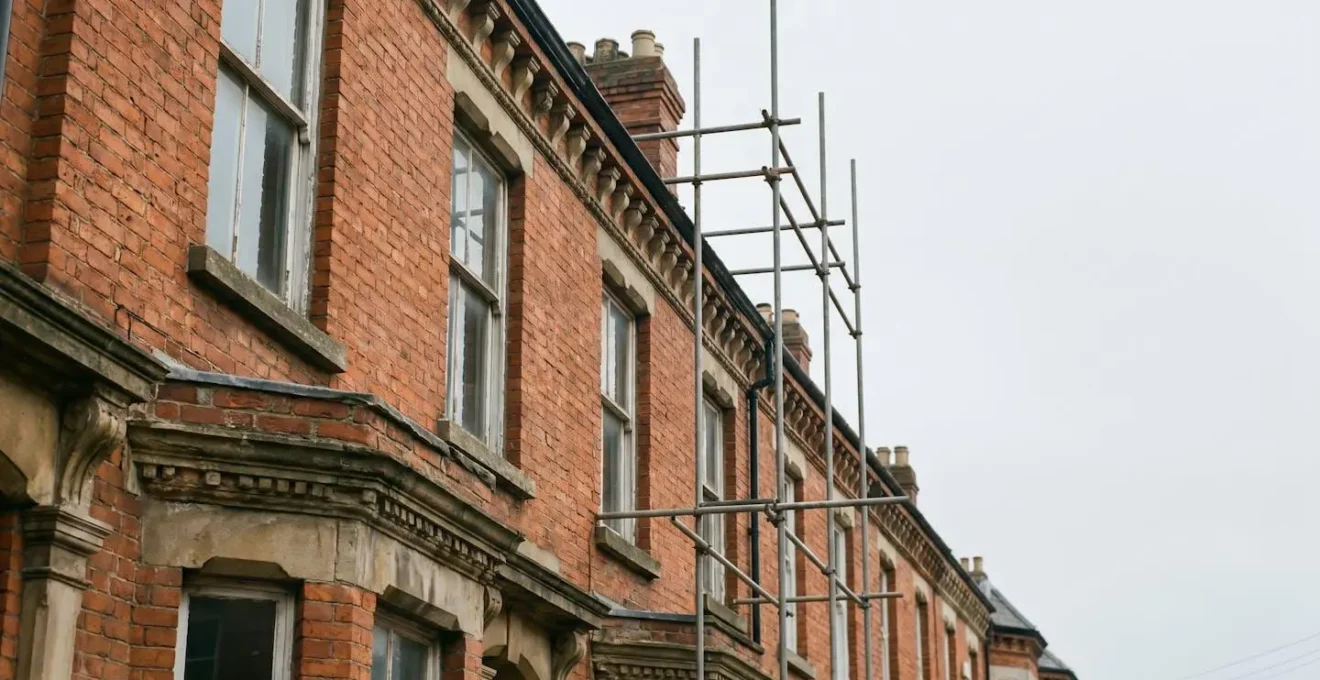
The key to slashing energy bills in a Victorian home isn’t chasing expensive gadgets, but mastering the building’s fabric first.
- Prioritising insulation and airtightness yields far greater returns than installing a heat pump in a draughty property.
- Preserving heritage features like sash windows is possible while achieving modern thermal and acoustic performance.
- A whole-house approach, where every upgrade works in synergy, is essential for long-term comfort and savings.
Recommendation: Begin with a thorough airtightness audit to identify and seal air leaks; this is the single most cost-effective action you can take.
As a UK homeowner in a Victorian terrace, the sting of high energy bills is a familiar, unwelcome guest. The charming but draughty period features, from single-glazed sash windows to suspended timber floors, seem designed to leak heat and money. You’ve likely heard the common refrains: “just get a heat pump” or “put solar panels on the roof.” While well-intentioned, this technology-first advice often misses the fundamental point and can lead to expensive mistakes.
The truth is, installing a powerful new heating system in a poorly sealed house is like trying to fill a leaky bucket. The real, lasting solution to energy conservation in period properties lies in a more strategic, considered approach. It’s a methodology we call “Fabric First.” Before you even think about the boiler or the battery, you must first master the building’s physical envelope: its walls, windows, roof, and floors.
But what does that mean in practice? How do you insulate a solid brick wall without causing damp problems? Is it possible to stop drafts without sacrificing the character of original features? This guide, structured from the perspective of a retrofit coordinator, will walk you through the correct sequence of operations. We will systematically deconstruct the challenge, moving from the broad building fabric to the systems within it, providing a clear roadmap to a comfortable, low-energy, and truly efficient home.
This article provides a comprehensive roadmap for your renovation journey. Explore the sections below to understand the critical decisions you’ll face at each stage, from insulating your walls to ensuring your newly airtight home has fresh, healthy air.
Summary: A Strategic Guide to Victorian Terrace Energy Renovation
- External vs Internal Wall Insulation: Which Is Best for Brick Facades?
- Airtightness: Why Stopping Drafts Is Cheaper Than Buying a Heat Pump?
- Secondary Glazing vs Double Glazing: How to Keep Original Sash Windows?
- WWHRS (Waste Water Heat Recovery): Can You Reclaim Heat from Your Shower Drain?
- Solar Battery ROI: Is It Worth Storing Energy if You Don’t Have an EV?
- Recyclability: Will Solid-State Batteries Be Easier or Harder to Recycle?
- Indoor Air Quality: Why You Need Mechanical Ventilation (MVHR) in Airtight Homes?
- How Will the UK National Grid Cope with the Electric Mobility Revolution?
External vs Internal Wall Insulation: Which Is Best for Brick Facades?
The first principle of a “Fabric First” retrofit is tackling the largest area of heat loss: the walls. In a typical Victorian terrace with solid brick walls, this presents a critical choice between external wall insulation (EWI) and internal wall insulation (IWI). EWI involves wrapping the outside of your home in an insulating layer, which is then rendered. While thermally very effective, it is often a non-starter for period properties, as it permanently hides the original brickwork and is usually prohibited in conservation areas.
This leaves IWI as the most common solution. However, the choice of material is paramount. A common mistake is to use non-breathable, petrochemical-based insulation like PIR (Polyisocyanurate) boards. While they have a good insulation value (U-value), they create an impermeable barrier. Victorian solid walls are designed to allow moisture to pass through them and evaporate away—a property known as vapour permeability. Trapping moisture within the wall structure with a non-breathable material can lead to condensation, damp, and long-term structural damage.
Therefore, for solid brick walls, breathable insulation materials are essential. Products like wood fibre or cork are ‘vapour-open,’ allowing the wall to function as intended while still providing excellent thermal and acoustic insulation. They work in harmony with the original building fabric, managing moisture and preventing the issues associated with sealing it in.
| Characteristic | PIR (Polyisocyanurate) | Wood Fibre | Cork |
|---|---|---|---|
| Embodied Carbon | High – manufactured using petrochemicals with energy-intensive production | Negative – locks carbon into building, made from timber by-products | Moderate – natural material with lower embodied energy than PIR |
| Breathability (Vapour Permeability) | Low – impermeable, can trap moisture in solid walls | High – allows moisture to pass through, preventing condensation | High – natural resistance to moisture with excellent vapour permeability |
| Thermal Mass | Low – responds quickly to temperature changes | High – slows heat transfer, providing stable internal conditions | Excellent – valued specifically for sound absorption properties |
| Acoustic Performance | Moderate – standard sound reduction | Excellent – dense natural material provides superior soundproofing for terraced living | Excellent – valued specifically for sound absorption properties |
| Space Loss (100mm insulation) | Internal: ~120mm total wall thickness; External: No interior space lost | Internal: ~120mm total wall thickness; External: No interior space lost | Internal: ~120mm total wall thickness; External: No interior space lost |
While IWI does involve a loss of internal floor space (around 120mm for a 100mm insulation build-up), the benefits in thermal comfort, reduced bills, and improved soundproofing between neighbours are substantial. Choosing a breathable material ensures these benefits are achieved without compromising the health of the building itself.
Airtightness: Why Stopping Drafts Is Cheaper Than Buying a Heat Pump?
After insulating the main surfaces, the next, and arguably most cost-effective, step is to address airtightness. A Victorian home is full of unintentional air gaps: around window frames, through suspended floors, up unused chimneys, and at junctions between walls and roofs. These drafts represent uncontrolled ventilation, constantly leaking the warm air you’ve paid to heat. Installing an expensive heat pump in a leaky house is futile; you’re simply paying to heat the street.
The financial case for focusing on airtightness first is compelling. Simple, targeted improvements can have a dramatic impact. In fact, research demonstrates that improving a home’s airtightness from a typical leaky value of 10 air changes per hour (ACH) down to a more respectable 5 ACH can lead to a reduction in energy demand of approximately 22%. This is a significant saving achieved not by generating more heat, but by keeping the existing heat inside for longer. It’s the epitome of the Fabric First philosophy.
Key leakage paths in a Victorian terrace include the gaps between skirting boards and floorboards, ill-fitting loft hatches, and service penetrations where pipes and cables pass through walls. As the image above illustrates, even the junction between the floor and the wall is a critical area that requires careful sealing. Tackling these points with appropriate airtightness tapes, membranes, and sealants is a systematic process that delivers a huge return on investment.
Action Plan: Key Air Leakage Paths in a Victorian Terrace
- Windows and Doors: Seal gaps around frames with weatherstripping and apply draught-proofing strips where frames meet walls.
- Suspended Floor Voids: Seal perimeter gaps between floorboards and walls. Address air bricks that may no longer be needed if fireplaces are sealed.
- Fireplaces and Chimneys: Install removable chimney balloons or caps to prevent heat loss through unused flues, while allowing for occasional ventilation.
- Bay Windows: Pay special attention to the junctions where the bay structure meets the main house walls, a notorious thermal bridge and air leakage point.
- Service Penetrations: Seal meticulously around all pipes, cables, and ducts that pass through external walls and floors using appropriate airtightness tapes or flexible sealant.
Achieving a high level of airtightness transforms the thermal performance of a home. It creates a stable, comfortable internal environment free from drafts, and it is the essential prerequisite before considering an upgrade to a modern, low-temperature heating system like a heat pump.
Secondary Glazing vs Double Glazing: How to Keep Original Sash Windows?
Windows are the eyes of a Victorian home, and original timber sash windows are a defining heritage feature. However, their single-pane construction makes them a major point of heat loss. The common assumption is that they must be replaced with modern uPVC double-glazing, but this often compromises the building’s character and may not be permitted in conservation areas. Fortunately, there are excellent alternatives that balance heritage with performance.
The primary choice is between secondary glazing and slim-profile double-glazed replacements. Secondary glazing involves installing a discreet second pane of glass on the inside of the existing window. This creates a large air gap, which is not only excellent for thermal insulation but also provides superb acoustic performance. For terraced houses on busy streets, this can be a game-changer. Maintaining separate panes allows the original sash window to remain untouched and fully operational.
Alternatively, specialist companies can manufacture new timber sashes that house slim-profile double-glazing or even ultra-thin vacuum-insulated glass (VIG). These units are designed to replicate the fine glazing bars and sightlines of the originals, making them almost indistinguishable from a heritage perspective while offering top-tier thermal performance. This is a more expensive route but offers the convenience of a single, integrated window system.
| Solution | Thermal Performance (U-Value) | Acoustic Reduction | Heritage Impact | Daily Operation | Typical Cost Range |
|---|---|---|---|---|---|
| Original Single Glazing (retained) | Poor (~5.0 W/m²K) | Minimal (STC 26-28) | None – fully authentic | Original mechanism, may be draughty | £ – repair only |
| Secondary Glazing | Good (~2.0 W/m²K combined) | Excellent (10-18 dB reduction, STC 42-45 combined) | Low – original window visible and retained | Dual operation required; cleaning between panes challenging | ££ – moderate retrofit cost |
| Slim Double-Glazed Replacement Sashes | Excellent (~1.4 W/m²K) | Good (STC 35-40) | Moderate – requires replication of sightlines and profiles | Seamless single operation; standard cleaning | £££ – bespoke manufacturing required |
| Vacuum-Insulated Glass (VIG) in Restored Sashes | Excellent (~0.8 W/m²K) | Very Good (STC 38-42) | Very Low – retains original timber and profiles | Original mechanism restored; standard cleaning | ££££ – specialist restoration and advanced glazing |
The decision often comes down to budget, planning constraints, and desired outcome. For many, a combination of professionally restored and draught-proofed original sashes combined with high-performance secondary glazing offers the best balance of cost, conservation, and comfort.
WWHRS (Waste Water Heat Recovery): Can You Reclaim Heat from Your Shower Drain?
Once you’ve addressed the main building fabric, you can start looking at smarter ways to reduce energy consumption within the home. One of the most effective and often overlooked technologies is Waste Water Heat Recovery (WWHRS). Every time you take a shower, you send litres of valuable hot water—and the energy used to heat it—straight down the drain. A WWHRS system is a simple, passive device that intercepts this waste heat and uses it to pre-warm the incoming cold water supply.
The technology consists of a specialised section of pipe with a heat exchanger. As the warm waste water from the shower flows down, it passes its heat to the fresh cold mains water flowing up to the shower mixer and/or the water heater. This means the boiler or water heater has to do significantly less work to get the water up to the desired temperature. It’s an elegant solution that requires no electricity, has no moving parts, and operates automatically every time you shower.
The savings are significant. A typical domestic installation can cut hot water energy consumption by up to 55%, translating into substantial bill reductions with very short payback periods, often just 2-3 years. It’s a prime example of a ‘fit and forget’ technology that continuously saves energy and money in the background.
Case Study: WWHRS Efficiency in a UK Dwelling
A study on a Recoup Pipe+ HE system installed in a standard UK home, assuming five showers per day, found it saves approximately 2,519 kWh of energy annually. The system achieves this with a 40% heat recovery efficiency when configured to preheat both the shower and the main water heater. The financial payback is remarkably fast, estimated at just 1 to 1.5 years when offsetting electric water heating, and 3-4 years when working alongside a gas boiler. With no maintenance requirements, it provides a passive, long-term reduction in the home’s energy demand.
For a family in a terraced house, where daily showers contribute significantly to gas or electricity bills, installing a WWHRS system during a bathroom renovation is one of the smartest, highest-ROI investments you can make. It perfectly aligns with the retrofit philosophy of reducing demand before optimising supply.
Solar Battery ROI: Is It Worth Storing Energy if You Don’t Have an EV?
With the building fabric optimised and energy demand reduced, the next logical step is to consider on-site renewable generation. Solar photovoltaic (PV) panels are a popular choice for Victorian terraces, especially with advancements in discreet, all-black panels that can be acceptable even in some conservation areas. However, the real question for many homeowners is whether to pair them with a battery, particularly if they don’t own an electric vehicle (EV).
The answer depends entirely on your energy usage patterns. Solar panels generate the most electricity in the middle of the day, when a typical household’s consumption is low. Without a battery, this valuable, free electricity is exported to the grid for a minimal return. A battery allows you to store this excess solar energy and use it during the evening peak, when your demand for lighting, cooking, and heating is highest. This practice, known as ‘time-shifting’, maximises your self-consumption of free solar energy and minimises your reliance on expensive peak-rate grid electricity.
For a home with an air source heat pump, a battery becomes even more valuable. The heat pump’s significant electrical load can be largely met by the stored solar energy from the day, dramatically reducing running costs. Furthermore, a battery unlocks the potential of smart time-of-use tariffs. These tariffs offer very cheap overnight electricity, allowing you to charge your battery from the grid when prices are low and use that stored energy to power your home during expensive daytime periods, providing savings even on cloudy winter days.
Sizing the battery correctly is crucial. There’s no point in installing a huge battery that you never fully use. For a non-EV household with a heat pump, a capacity of 8-12 kWh is often the sweet spot. This is typically enough to absorb the excess midday solar generation and cover the evening’s heating and hot water demand, delivering the best return on investment without being oversized.
Recyclability: Will Solid-State Batteries Be Easier or Harder to Recycle?
As we integrate technologies like solar batteries into our homes, long-term sustainability becomes a valid concern. The future promises advancements like solid-state batteries, which may offer higher density and safety, but their complex material science also poses new questions for the recycling industry. The challenge of creating a truly circular economy for high-tech components is significant.
However, before we even get to the end-of-life recycling of a battery, the “Fabric First” approach forces us to ask a more immediate and impactful question: what is the environmental cost of the materials we are using for the retrofit itself? This is the concept of embodied carbon—the total greenhouse gas emissions generated to produce and transport a building material. A truly sustainable renovation must consider not just the operational energy saved over the building’s life, but also the initial carbon cost of the renovation itself.
This is where the choice of insulation materials, discussed earlier, becomes profoundly important again. Petrochemical-based insulations have a high embodied carbon footprint. In contrast, natural, plant-based materials can be carbon-negative. As the UK’s leading heritage body, Historic England, notes:
Materials like timber, wood fibre, and cork insulation can sequester more carbon than is emitted during their production
– Historic England, The Embodied Carbon Emissions of Construction and Retrofit Materials for Traditional Buildings
By choosing materials like wood fibre, you are not only creating a healthy, breathable wall construction but are actively locking carbon into the fabric of your home for decades. While the saving per dwelling might seem modest, a life cycle assessment study found that when scaled across the millions of UK homes needing upgrades, these choices become highly significant for achieving national net-zero targets. Prioritising low-embodied-carbon materials is a powerful, immediate way to contribute to decarbonisation, long before the battery in your loft needs replacing.
Indoor Air Quality: Why You Need Mechanical Ventilation (MVHR) in Airtight Homes?
We have successfully insulated the walls, upgraded the windows, and sealed all the drafts. Our Victorian terrace is now highly airtight, no longer leaking precious heat. This is a huge victory for energy efficiency, but it creates a new, critical challenge: ventilation. The old, drafty house ventilated itself, albeit uncontrollably. Our new, sealed house needs a way to bring in fresh air and remove stale, moist air without opening a window and wasting all the heat we’ve worked so hard to conserve.
The solution is Mechanical Ventilation with Heat Recovery (MVHR). An MVHR system is a whole-house ventilation system that continuously extracts warm, humid air from ‘wet’ rooms (kitchens, bathrooms) and supplies fresh, filtered air to ‘habitable’ rooms (living rooms, bedrooms). The magic happens in the central heat exchanger core. Here, the heat from the outgoing stale air is transferred to the incoming fresh air, recovering up to 95% of the heat that would otherwise be lost. You get fresh air without the cold drafts and energy penalty.
Installing MVHR in a Victorian terrace requires careful planning, as it involves running ductwork through the property. The choice is between a centralised system, with a single unit in the loft or a cupboard, or decentralised units, which are installed on a room-by-room basis. The table below outlines the key considerations for each approach.
| System Type | Centralised MVHR | Decentralised MVHR (Room Units) |
|---|---|---|
| Installation Complexity | High – requires extensive ductwork throughout property, challenging in period homes with solid walls and limited ceiling voids | Low – individual through-wall units per room, minimal structural intervention |
| Heat Recovery Efficiency | Excellent (85-95%) – single high-efficiency heat exchanger core | Good (70-85%) – multiple smaller heat exchangers, slightly less efficient per unit |
| Visual Impact | Minimal once installed – ducts hidden in voids, ceilings, or bulkheads; single small wall grille per room | Moderate – visible internal unit (similar to air conditioning unit) in each room with external grille |
| Suitability for Victorian Terrace | Best for whole-house renovation where ceilings/floors opened; can integrate with service corridors or wardrobes | Ideal for phased renovation or listed buildings where ductwork runs are impractical or prohibited |
| Maintenance | Centralised – single filter change location, professional servicing every 2 years | Distributed – filter changes required in multiple room units, but accessible to homeowner |
| Cost (typical 3-bed terrace) | £6,000-£12,000 including ductwork and installation | £4,000-£8,000 for 4-6 room units including installation |
| Noise Levels | Very quiet – unit in loft/utility room, remote from living spaces | Moderate – units within rooms but modern systems whisper-quiet (20-35 dB) |
Investing in MVHR is not an optional extra in a deep retrofit; it is an essential component for ensuring excellent indoor air quality. It prevents problems with condensation and mould and provides a constant supply of fresh, filtered air, creating a healthier and more comfortable living environment.
Key Takeaways
- A “Fabric First” approach, prioritising insulation and airtightness, is the most cost-effective strategy for retrofitting a Victorian home.
- Using breathable, natural insulation materials is crucial to prevent moisture damage in solid brick walls.
- Airtightness is the foundation of energy efficiency; it must be addressed before upgrading heating systems like heat pumps.
How Will the UK National Grid Cope with the Electric Mobility Revolution?
The national conversation about energy often focuses on large-scale challenges, such as the strain on the UK’s National Grid from the mass adoption of electric vehicles and the electrification of heat. It’s easy to feel that our individual homes are just passive consumers at the mercy of a vast, strained system. However, a properly executed deep retrofit transforms this relationship entirely. Your home stops being part of the problem and becomes a key part of the solution.
By systematically applying the “Fabric First” principles, you have drastically reduced your home’s fundamental energy demand. The airtight, well-insulated building fabric means your heat pump (now a viable option) runs far less often and more efficiently. The WWHRS system has slashed your hot water demand. Your home’s base load is now a fraction of what it once was. This dramatic reduction in demand, when replicated across thousands of homes, is precisely what gives the grid the breathing room it needs.
Furthermore, with solar panels and a battery, your home becomes an active, intelligent grid participant. You are generating your own clean electricity, storing it to avoid peak demand, and potentially even providing services back to the grid. A fully retrofitted Victorian terrace is no longer a drain on resources; it is a resilient, efficient, and flexible energy hub. A monitoring study of a completed Passivhaus Victorian retrofit found it reduced annual energy bills from £2,026 to £772, a testament to the power of this approach.
Case Study: The Judd – A Grid-Friendly Victorian Retrofit
A Victorian terrace in Tottenham, North London, underwent a comprehensive deep retrofit guided by fabric-first principles. High-quality insulation and meticulous airtightness measures were prioritised. This enabled the successful installation of an air source heat pump, powered in part by a rooftop solar PV array. The project demonstrates how a renovated period home can actively support grid decarbonisation by slashing its peak energy demand and generating its own renewable power on-site. It provides a replicable, real-world model for how the UK’s historic housing stock can be transformed into assets for a modern, flexible energy grid.
So, how will the grid cope? It will cope because of well-executed projects like yours. By focusing on reducing demand before optimising supply, you not only achieve a comfortable, low-bill home but also contribute directly to a more stable and sustainable national energy future.
By following this structured, fabric-first approach, you can transform your Victorian terrace from a source of financial strain into a model of energy efficiency and comfort. To begin this journey, the logical next step is to commission a professional assessment of your home’s current performance to create a bespoke retrofit plan.