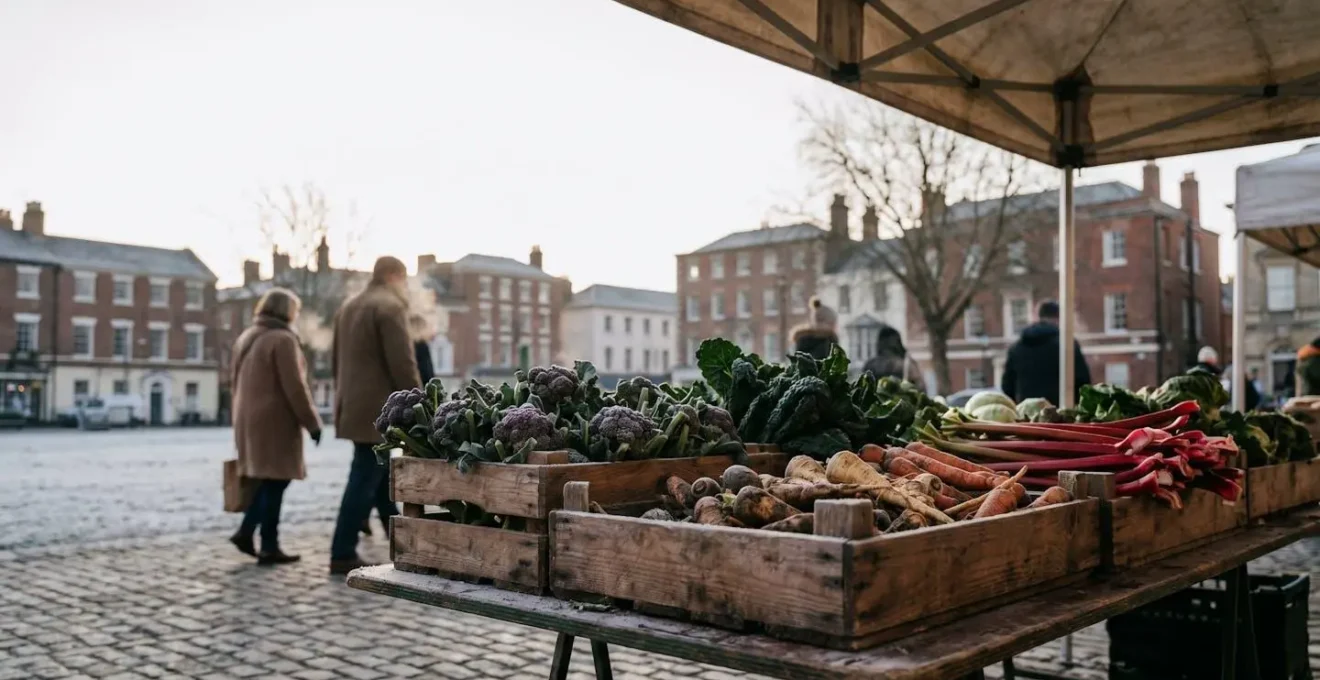
Adopting a 100-mile diet in a UK city during winter is not about restriction, but about unlocking a more resilient and flavourful food system.
- It involves preserving summer’s bounty with modern methods like pressure canning, which are safer and more versatile than traditional techniques.
- Success depends on sharing risk and reward with local farmers through Community Supported Agriculture (CSA) and understanding that ‘local’ isn’t the only metric for sustainability.
Recommendation: The first step is to audit one local farm’s ecological practices; start by asking about their winter food strategy and soil health.
The bleakness of a British winter often feels like a direct challenge to anyone attempting to eat locally. As supermarket shelves remain stubbornly full of Spanish tomatoes and Egyptian strawberries, the committed locavore can feel cornered, facing a monotonous diet of potatoes, parsnips, and not much else. Many guides suggest the obvious: visit a farmers’ market and learn to love root vegetables. This advice, while well-intentioned, barely scratches the surface of the issue and often leads to frustration and a sense of failure.
But what if the entire premise is wrong? What if being a locavore in winter isn’t about enduring scarcity, but about actively participating in a rich, resilient, and surprisingly diverse food system? The real challenge isn’t surviving the “hungry gap,” but rather a lack of connection to the systems and strategies that make year-round local eating not just possible, but joyful. This guide moves beyond the platitudes to explore the smart preservation techniques, community-based models, and principles of ecological stewardship that empower urban dwellers to eat well within a 100-mile radius, even in the depths of February.
This article provides a comprehensive roadmap for navigating the challenges and opportunities of seasonal eating in the UK. We will explore what’s genuinely available during the lean months, how to preserve the abundance of summer, and how to make informed choices that support a truly sustainable food culture.
Summary: A Practical Guide to Winter Locavore Eating in the UK
- The Hungry Gap: What Can You Actually Eat in the UK in March?
- Canning and Pickling: How to Store Summer Glut for Winter Eating?
- Community Supported Agriculture: Is a Veg Box Subscription Worth the Risk?
- Pasture-Fed: Why Buying Meat Direct from the Farm Is Better for You?
- Food Miles vs Lifecycle: Is Local Hothouse Lettuce Better than Imported Field Lettuce?
- Hyper-Local Tourism: Why Buying Direct from Farmers Matters When You Travel?
- Biochar: How to Turn Farm Waste into Permanent Soil Carbon?
- How to Practice Holistic Ecological Stewardship on Small Holdings?
The Hungry Gap: What Can You Actually Eat in the UK in March?
The “hungry gap” is the period in early spring, typically March and April, when winter stores are dwindling and new crops have yet to grow. It’s the time of year when the UK’s reliance on imports becomes most apparent, with around 30% of the UK’s food coming from the EU and a further 11% from elsewhere. For the urban locavore, this period presents the ultimate test. However, it’s a mistake to think nothing is available. The key is to look beyond the obvious root vegetables. This is the time for hardy greens like kale and chard, leeks that have sweetened in the frost, and purple sprouting broccoli. It’s also the season for unique, celebrated produce that thrives specifically in these conditions.
One of the most iconic examples of a hungry gap delicacy is forced rhubarb. Instead of signifying scarcity, this crop represents a triumph of ingenuity and terroir, providing a vibrant splash of colour and flavour when little else is growing. It’s a powerful reminder that local eating in winter is not about what you lack, but about celebrating what you have.
Case Study: Yorkshire Forced Rhubarb – A Protected Delicacy
Awarded Protected Designation of Origin (PDO) status in 2010, Yorkshire Forced Rhubarb is a prestigious seasonal crop. Cultivated in complete darkness within the “Rhubarb Triangle” between Wakefield, Morley, and Rothwell, the rhubarb is harvested by candlelight to prevent photosynthesis. This unique process, perfected in the cold climate and clay soils of the Pennines, produces incredibly tender, sweet, and vividly pink stems from January to March. It requires 40% less sugar than outdoor-grown rhubarb, making it a celebrated ingredient for chefs and a symbol of hyper-local, seasonal eating.
Canning and Pickling: How to Store Summer Glut for Winter Eating?
The most effective strategy for navigating the hungry gap is to ensure it never really happens in your own pantry. The key is planning ahead during the glut of summer and autumn. While traditional British preserving often revolves around high-sugar jams and high-vinegar pickles, a more versatile and modern approach is gaining ground: pressure canning. This science-backed method allows for the long-term, shelf-stable preservation of low-acid foods, a category that includes most vegetables, soups, and even meats. It fundamentally changes the game for the urban locavore.
Unlike simple water-bath canning (suitable only for high-acid foods like fruits and some tomatoes), a pressure canner achieves temperatures high enough (around 116-121°C) to eliminate the risk of botulism spores. This opens up a world of possibilities. That surplus of courgettes from August can become a ready-to-use soup base in February. A bumper crop of green beans can be preserved with their texture intact. It allows you to capture the flavour of produce at its absolute peak and enjoy it months later, significantly reducing reliance on out-of-season imports.
Case Study: The Rise of the UK Pressure Canning Movement
Though a household skill in North America, pressure canning is relatively new to the UK. In response to a growing desire for food self-sufficiency, organisations like PressureCanning.co.uk are now offering workshops across the country. These courses teach the science and safety protocols for preserving a wide range of foods without refrigeration. The movement directly empowers locavores to bridge the hungry gap by creating a personal larder of preserved summer goodness, from vegetable broths to canned local meats, making the 100-mile diet a year-round reality.
Community Supported Agriculture: Is a Veg Box Subscription Worth the Risk?
For many city dwellers, a Community Supported Agriculture (CSA) scheme, often manifesting as a weekly veg box, is the most direct link to a local farm. The model is simple: you pay the farm a subscription upfront, and in return, you receive a share of the harvest throughout the season. With over 220 CSA farms in the UK now feeding over 55,000 people, it’s a growing movement. But it’s fundamentally different from a commercial delivery service like Riverford or Abel & Cole, and the key difference lies in one word: risk. In a true CSA, you are not just a customer; you are a member of the farm’s community. If there’s a bumper crop of tomatoes, you share in the abundance. If a blight wipes out the potatoes, you share in the loss. This “shared risk” model is the very heart of a CSA, but it’s also what makes many potential subscribers hesitate. Is it worth it?
The answer depends on your goals. If you seek convenience, predictability, and the ability to choose exactly what you receive, a commercial veg box is a better fit. If, however, you seek a deep connection to your food, a genuine understanding of seasonality, and the knowledge that your money is directly sustaining a local farm and its ecological practices, then a CSA is unparalleled. It forces you to cook creatively (you will learn to love celeriac) and connects you to the realities of food production through farm visits and newsletters. It’s less a transaction and more a relationship.
The following table, based on information from organisations like the CSA Network UK, breaks down the key differences to help you decide which model aligns with your values and lifestyle.
| Feature | True CSA Scheme | Commercial Veg Box (Riverford/Abel & Cole) | Weekly Farmers Market |
|---|---|---|---|
| Financial Model | Upfront seasonal/yearly subscription – you share farm’s financial risk | Pay-as-you-go weekly deliveries – no financial commitment | Pay per visit – complete flexibility |
| Variety Control | Low – you get what’s harvested (seasonal reality) | Medium – curated selection with some choice | High – choose exactly what you want |
| Price | Variable – cheaper in summer glut, same price in hungry gap | Premium – convenience costs more | Competitive – direct pricing, potential bargains |
| Community Connection | High – farm visits, volunteering, events | Low – transactional delivery service | Medium – face-to-face with growers |
| Time Commitment | Medium – collection required, optional volunteering | Low – doorstep delivery | High – must visit during market hours |
| Recipe Adventure Required | High – must learn to cook celeriac gluts | Medium – some unusual items included | Low – buy only familiar items |
Pasture-Fed: Why Buying Meat Direct from the Farm Is Better for You?
For non-vegetarians, incorporating meat and dairy into a locavore diet presents its own set of challenges, particularly around ethics, quality, and cost. Buying meat directly from a small-scale, local farm that practices good ecological stewardship offers a powerful solution. This approach moves beyond the anonymous, plastic-wrapped supermarket product to a system where you know the farmer, the breed of animal, and the landscape it was raised on. This connection is not just philosophical; it has tangible benefits for flavour, nutrition, and the environment. As eco-chef Tom Hunt puts it, the connection is visceral.
Provenance isn’t abstract. It’s in the flavour.
– Tom Hunt, Tom’s Feast
Animals raised on pasture, as part of a regenerative farming system, play a crucial role in building soil health and sequestering carbon. Pasture-fed meat and dairy are also nutritionally superior, typically containing higher levels of omega-3 fatty acids and antioxidants. By buying direct—often in bulk through a “meat share” or by purchasing a quarter or half animal—you provide the farmer with a guaranteed income, cut out the middleman, and often pay a lower price per kilo than you would for premium cuts at a butcher. It requires an initial investment and some freezer space, but it establishes a direct, resilient link in your personal food chain.
Food Miles vs Lifecycle: Is Local Hothouse Lettuce Better than Imported Field Lettuce?
The concept of “food miles”—the distance food travels from farm to plate—has long been the primary metric for eco-conscious consumers. The logic seems simple: the shorter the distance, the lower the carbon footprint. This has led to a default assumption that local is always better. However, a more sophisticated understanding of sustainability requires us to look beyond food miles to the product’s entire lifecycle assessment. This includes the energy used for cultivation, water consumption, packaging, and waste. When you apply this lens, the picture becomes much more complex.
Consider the classic dilemma: a head of lettuce grown locally in a heated greenhouse in January versus a head of lettuce grown in a field in Spain and trucked to the UK. The Spanish lettuce has high food miles, but its cultivation was powered by free sunlight. The local lettuce has zero food miles but was grown using fossil fuels to heat the greenhouse. In this scenario, the imported lettuce often has a lower overall carbon footprint. This doesn’t mean local is irrelevant. As many sustainable food advocates argue, the guiding principle should be: “Seasonality trumps locality.” The primary goal is to eat what is naturally in season, and *then* source it as locally as possible.
This is where low-energy season extension techniques, like unheated polytunnels, become vital. They create a microclimate that protects hardy crops from the worst of the winter weather, allowing farmers to grow salads and greens year-round with minimal energy input, offering the best of both worlds: local and low-impact.
Hyper-Local Tourism: Why Buying Direct from Farmers Matters When You Travel?
The principles of locavorism shouldn’t stop when you go on holiday. In fact, travelling within the UK provides a perfect opportunity to deepen your connection to regional food systems and directly support rural economies. Instead of defaulting to the nearest supermarket upon reaching your destination, think of your trip as a chance to explore a new food landscape. Every region has its own unique producers, farm shops, and farmers’ markets. Seeking them out not only provides you with fresher, more flavourful food but also channels your tourist spending directly into the hands of the people who are stewards of the local landscape.
This practice, which could be called “hyper-local tourism,” transforms a simple holiday into an enriching agricultural and culinary experience. It’s about more than just buying food; it’s about engaging with producers, hearing their stories, and understanding the specific challenges and triumphs of their region. Visiting a farm café, buying cheese from a local creamery, or picking your own fruit creates lasting memories and a tangible connection that a supermarket transaction can never offer. It reinforces the idea that our food choices have a direct impact on the communities and environments we value, whether at home or away.
Here is a simple challenge to try on your next UK break:
- Before traveling: Use the CSA Network UK’s interactive map to locate community farms near your destination.
- Upon arrival: Visit the nearest farmers’ market within 48 hours and ask stallholders about their farm’s location and visiting opportunities.
- Mid-holiday: Book one farm experience, such as an Open Farm Sunday visit, a PYO (Pick Your Own) farm, or a meal at a farm shop café.
- Daily practice: Source at least one meal component from within 100 miles, like eggs from a roadside stall or cheese from a regional creamery.
- Document and share: Keep a food diary of your local sources and share your finds on social media to inspire others and thank the producers.
Biochar: How to Turn Farm Waste into Permanent Soil Carbon?
As you deepen your relationship with local producers, you can begin to move from being a passive consumer to an active, informed supporter of ecological stewardship. This means learning to ask better questions—questions that go beyond “is it organic?”. One of the most powerful indicators of a farmer’s commitment to regenerative practices is their approach to soil health. A key, though less common, practice in this area is the use of biochar. So, what is it? Biochar is essentially a very stable form of charcoal produced by heating organic waste (like wood chips, straw, or manure) in a low-oxygen environment, a process called pyrolysis.
Unlike compost, which decomposes over a few years, biochar is incredibly stable and can persist in the soil for hundreds or even thousands of years. Its porous structure acts like a sponge, holding onto water and nutrients, which reduces runoff and makes them more available to plants. It also provides a fantastic habitat for beneficial soil microbes. Crucially, in creating biochar, the carbon from the original organic matter is locked into a stable form instead of being released into the atmosphere as CO2. This makes it a powerful tool for long-term carbon sequestration. Asking a farmer, “Do you use practices like biochar to improve soil health?” signals a deep level of engagement. It shows you’re interested not just in the food they produce, but in the long-term health and resilience of the land they manage.
Key Takeaways
- The “hungry gap” is a planning challenge, not a dead end, featuring unique delicacies like forced rhubarb that celebrate seasonality.
- Community Supported Agriculture (CSA) is a partnership model based on shared risk and reward, offering a deeper connection than a commercial veg box.
- True sustainability requires looking beyond “food miles” to a product’s entire lifecycle, prioritising seasonality first, then locality.
How to Practice Holistic Ecological Stewardship on Small Holdings?
Ultimately, adopting locavore standards is about more than just food; it’s about becoming a participant in a system of holistic ecological stewardship. The most resilient and regenerative small farms operate not as food factories, but as complex ecosystems. They practice a form of agriculture that actively builds biodiversity, improves soil and water quality, and sequesters carbon, all while producing nutritious food. These are the farms that are truly building a resilient food future, and as consumers, learning to identify and support them is our most impactful act.
This kind of farming, often called regenerative agriculture, is evident in the landscape itself. You can see it in the presence of healthy hedgerows buzzing with pollinators, in the integration of trees among crops (agroforestry), and in livestock grazing on diverse pastures. It’s a system that closes its own loops, turning “waste” into a resource. The best CSA farms are often leading examples of this approach, demonstrating that small-scale, diversified farms can be more productive per acre than industrial monocultures while actively regenerating the environment.
Your Audit Checklist: Assessing a Farm’s Ecological Health
- Biodiversity indicators: Does the farm maintain hedgerows, wildflower margins, or insect hotels? Are there visible birds and pollinators?
- Soil health practices: Look for cover crops between seasons, signs of minimal tillage, or the use of compost and natural amendments like biochar.
- Water management: Check for systems like swales or ponds that capture rainwater, prevent runoff, and support the farm’s ecosystem.
- Agroforestry elements: Are trees integrated into growing areas? Do fruit or nut trees provide multiple yields alongside other crops?
- Waste systems: Does the farm compost all organic matter, effectively closing its nutrient loops? Do they offer zero-waste packaging options?
The next step is to transform this knowledge into action. Begin by choosing one strategy—whether it’s visiting a farm shop, researching a CSA, or simply asking a producer about their soil health practices—and start building your personal, resilient food network today.
Frequently Asked Questions about Adopting Locavore Standards in a UK City
What’s the difference between ‘Pasture for Life’ certification and ‘grass-fed’ labels in the UK?
Pasture for Life is a rigorous UK certification guaranteeing animals are 100% pasture-fed from weaning to slaughter, with no grain or concentrate feeds. The term ‘grass-fed’ is less regulated and can legally be used even if animals receive supplementary grain feeding. Always look for the Pasture for Life logo for genuine pasture-only meat.
Do pasture-fed animals in the UK really eat grass in winter?
UK pasture-fed animals cannot graze outdoors year-round due to weather. In winter, they’re fed conserved grass (silage or hay) harvested from the farm’s own pastures during summer. This is entirely normal, sustainable, and still qualifies as pasture-fed – the animals are eating preserved grass, not grain.
How much freezer space do I need to buy a half lamb directly from a UK farm?
A half lamb (typically 8-10kg of meat) requires approximately 60-80 litres of freezer space. A quarter pig needs about 100-120 litres. Consider starting a ‘meat-share’ co-op with 2-3 neighbours to split a whole animal, sharing costs and freezer burden while building community resilience.